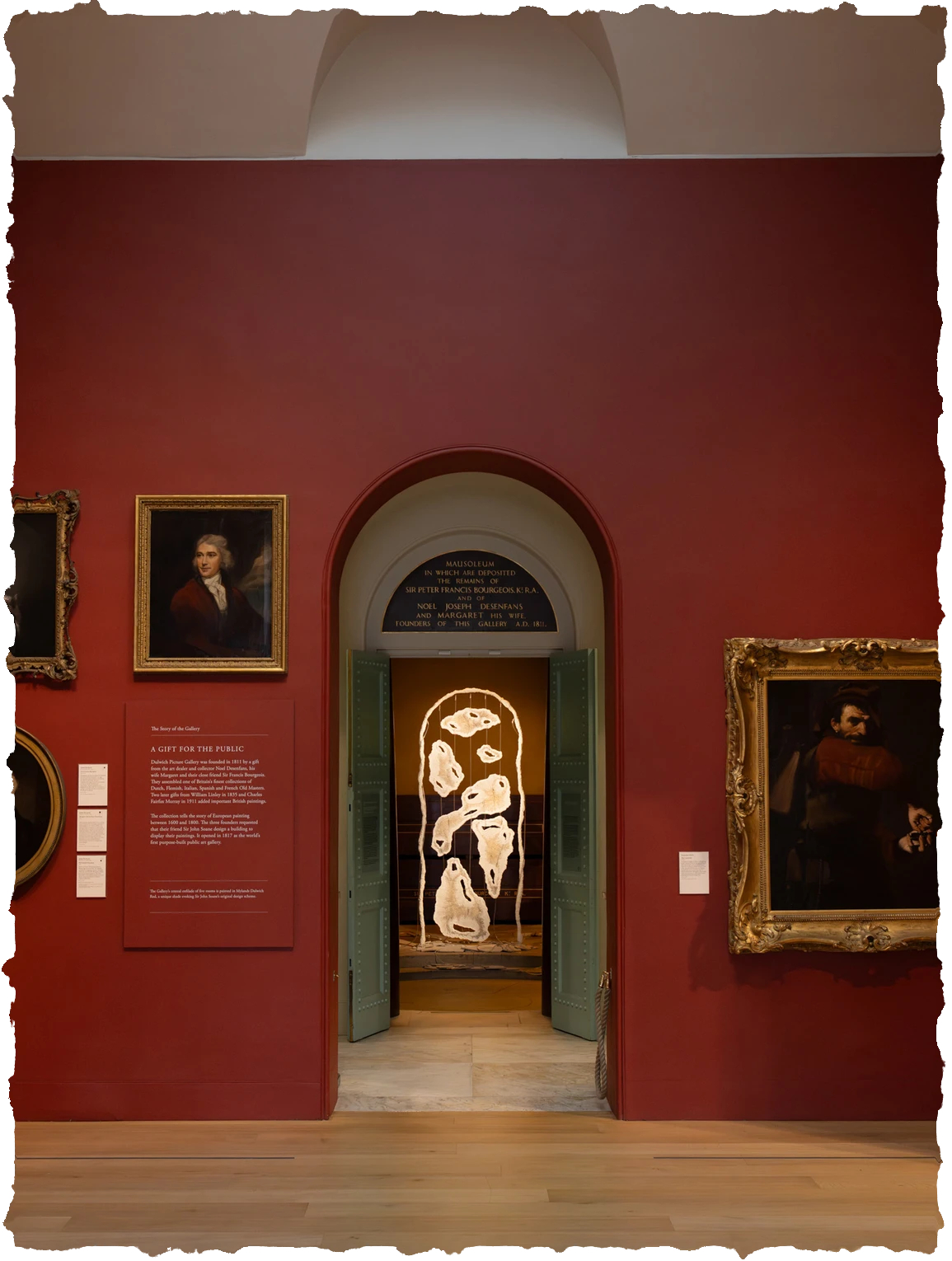
Between Sediments and Dead Zones
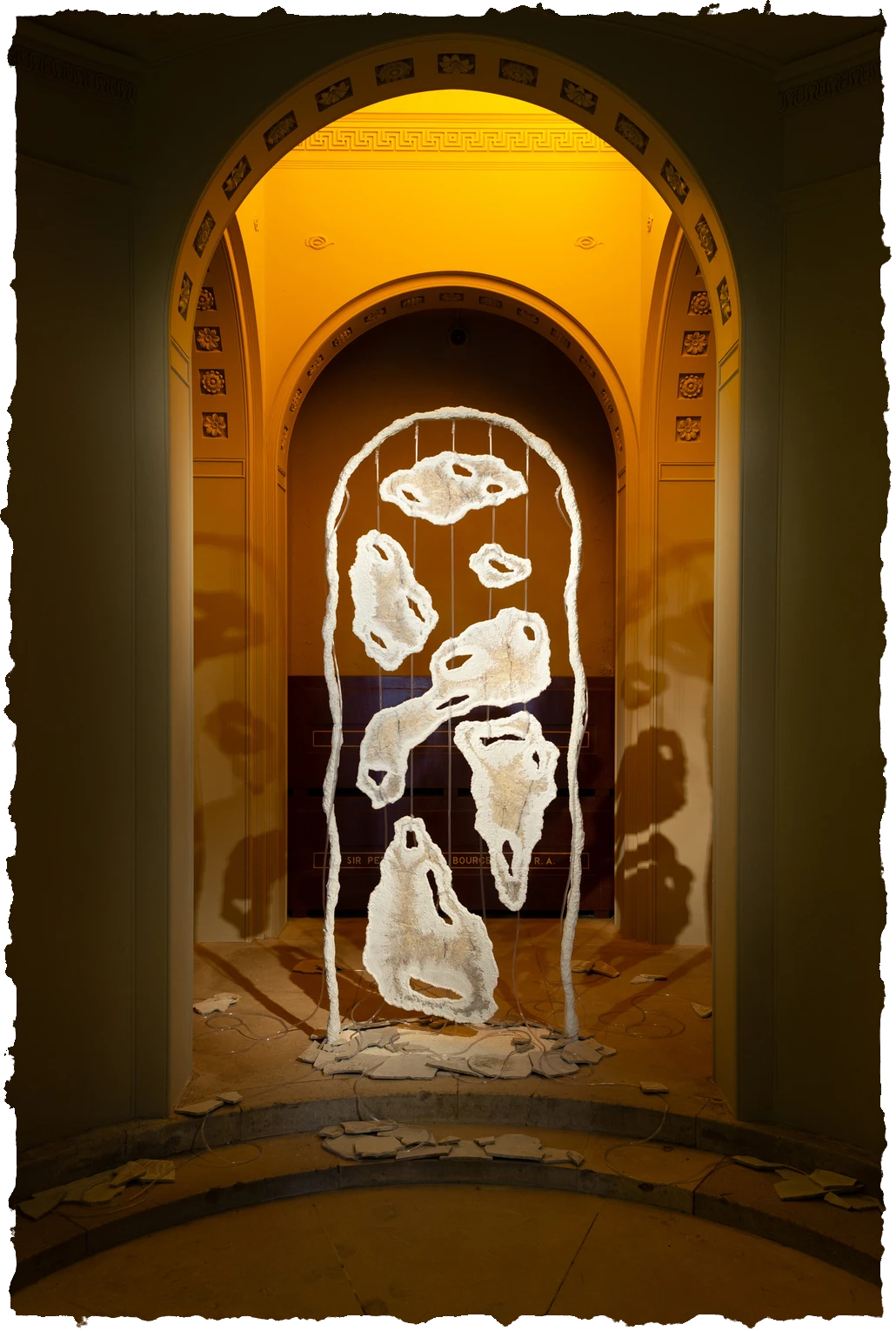
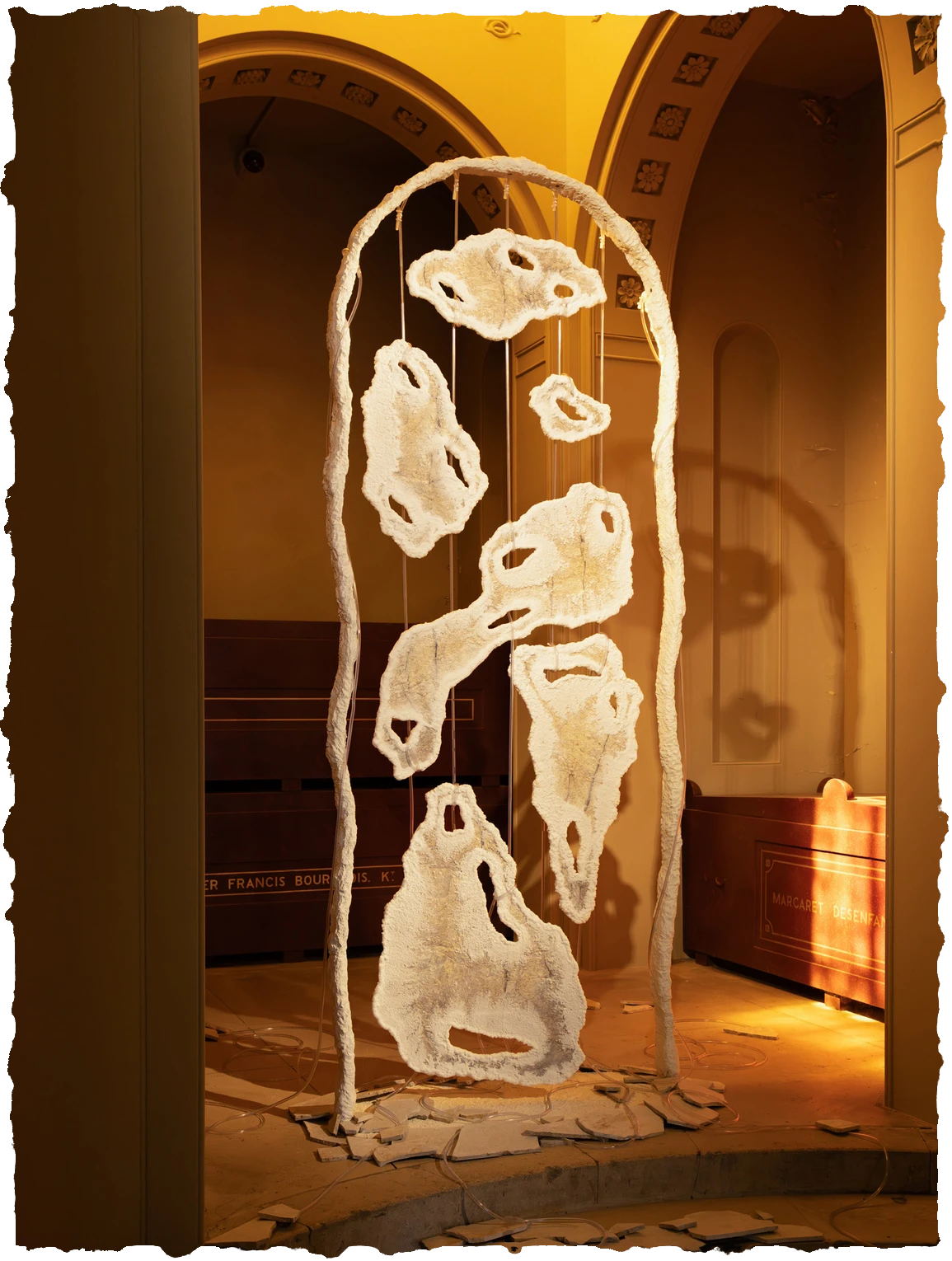
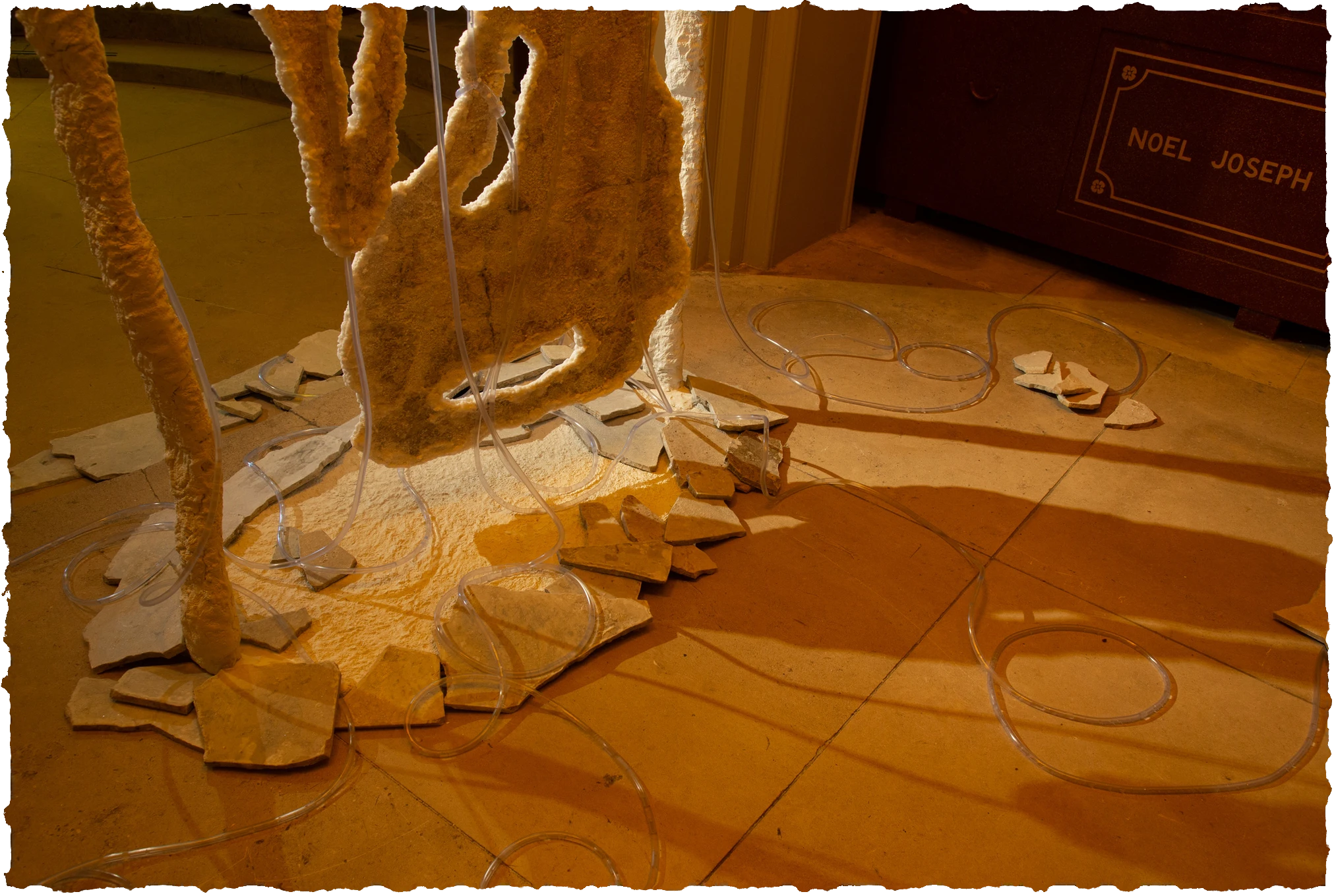
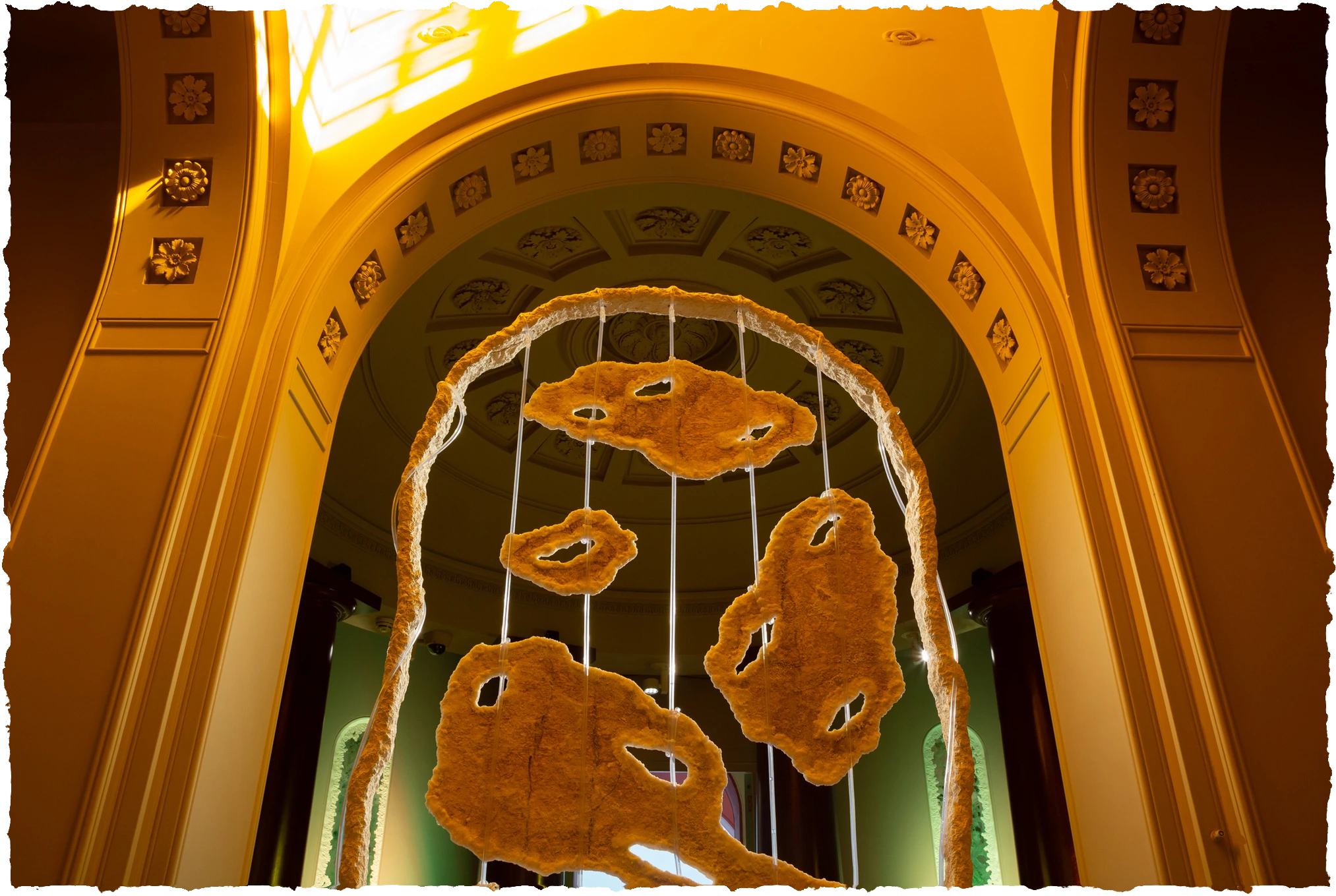
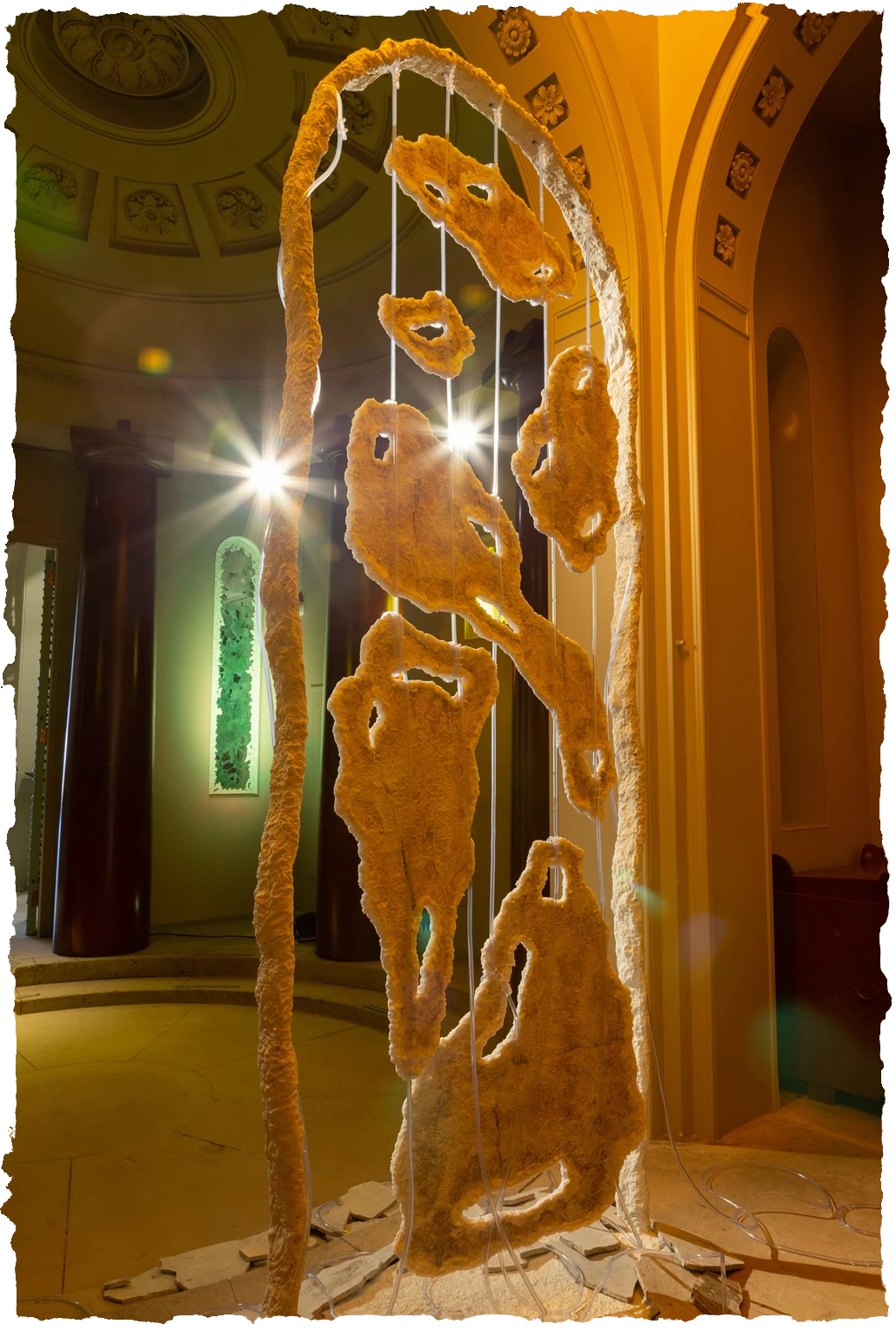
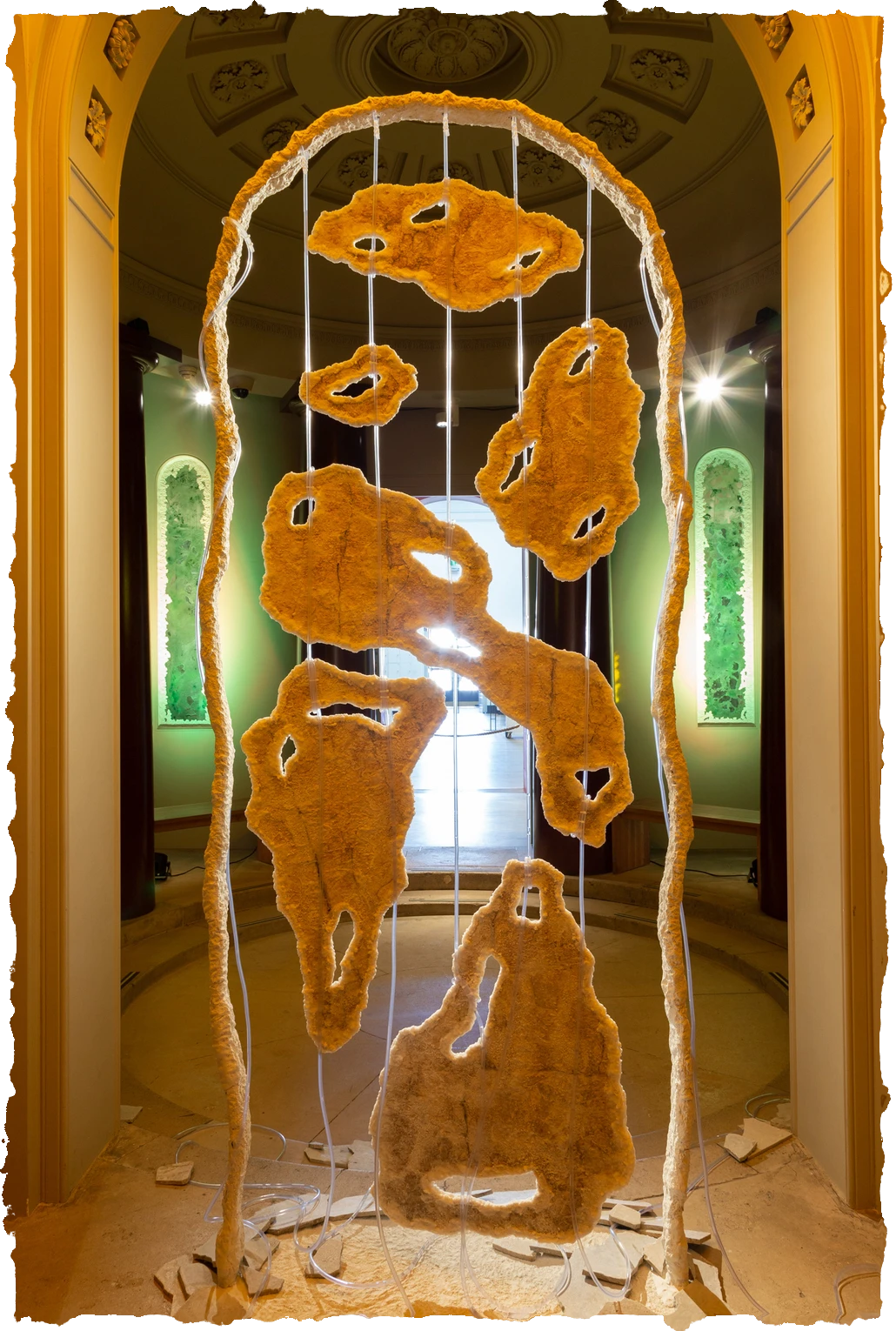
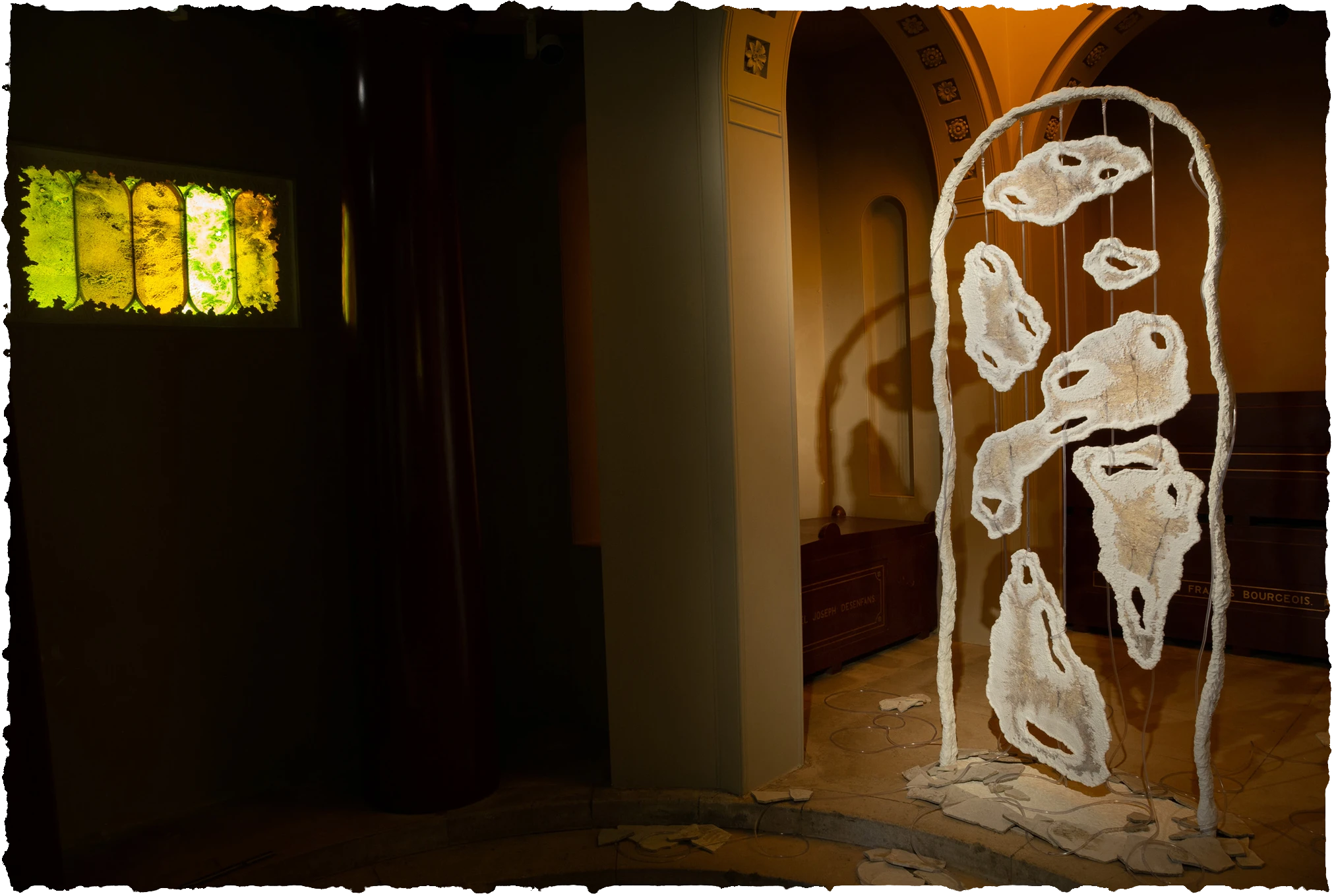
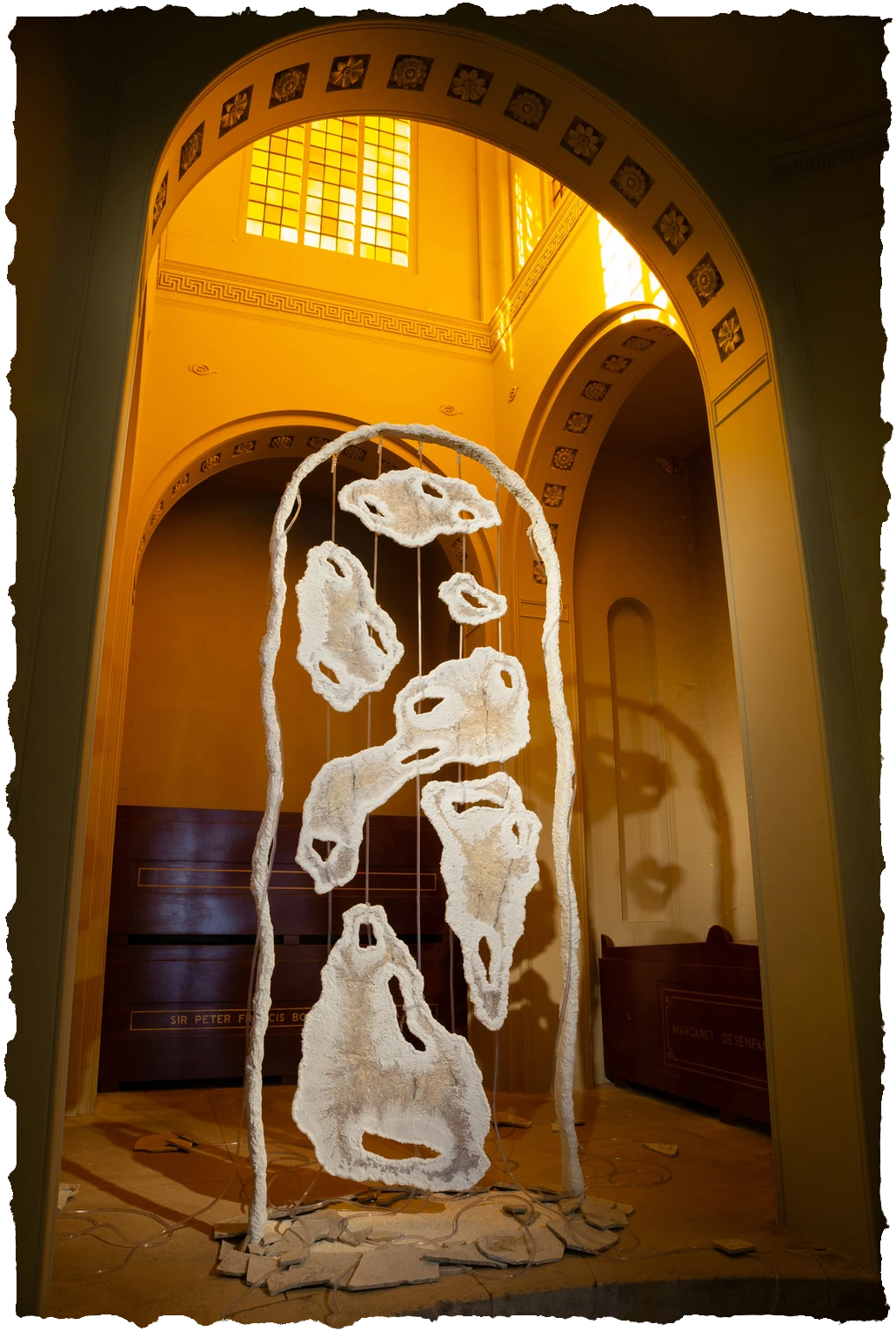
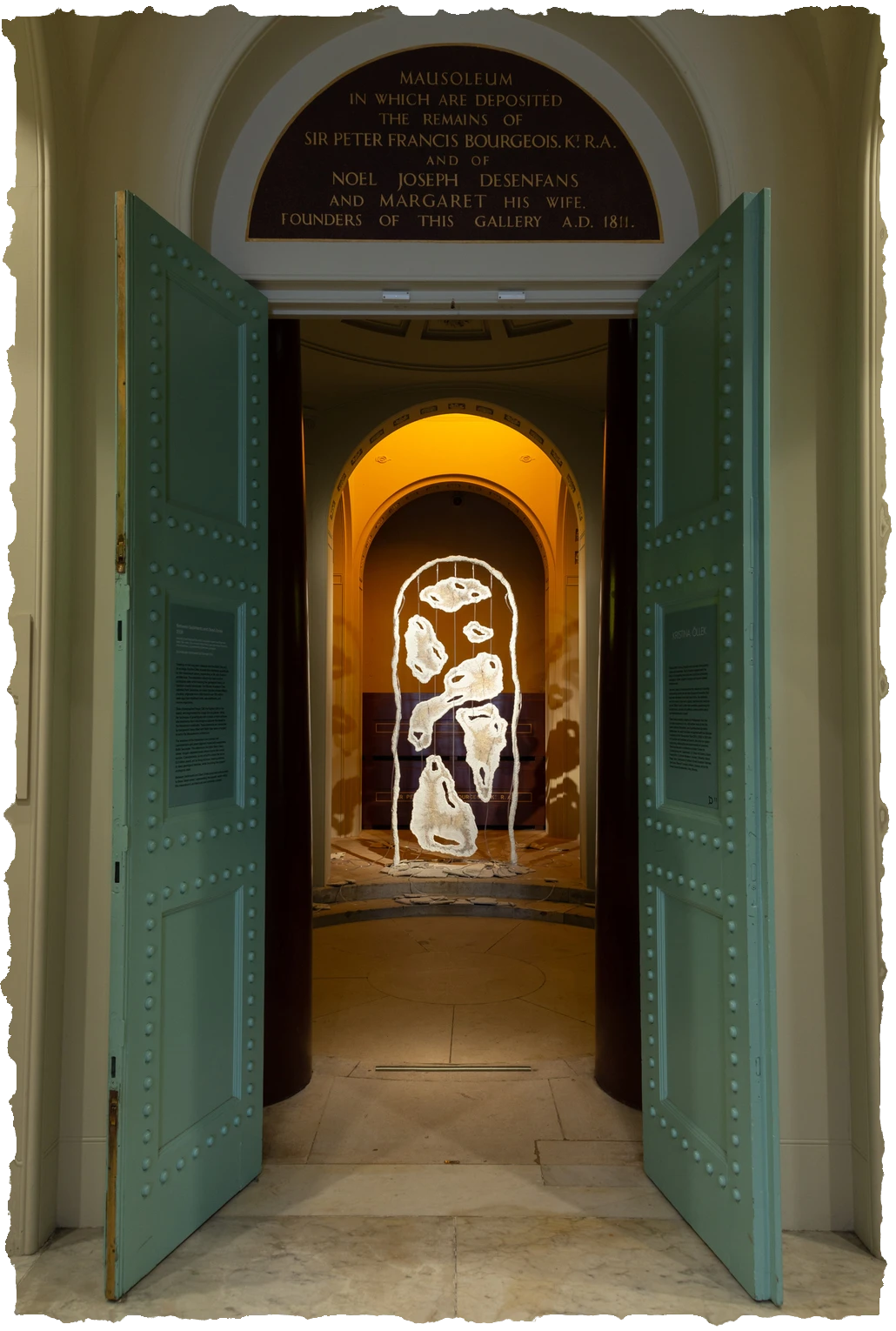
Drawing on her long-term research into the Baltic Sea and its ecology, Kristina Õllek created this installation specifically for the mausoleum space at Dulwich Picture Gallery, responding to Sir John Soane's architecture. The installation reflects the sea's current ecological state whilst evoking the geological history of Estonia's coastal landscape. The Silurian limestone Õllek selected from Saaremaa, an island that also shaped Mägi's practice, originates from cliffs formed over 420 million years ago from fossilised reefs, sea sediments, and marine organisms.
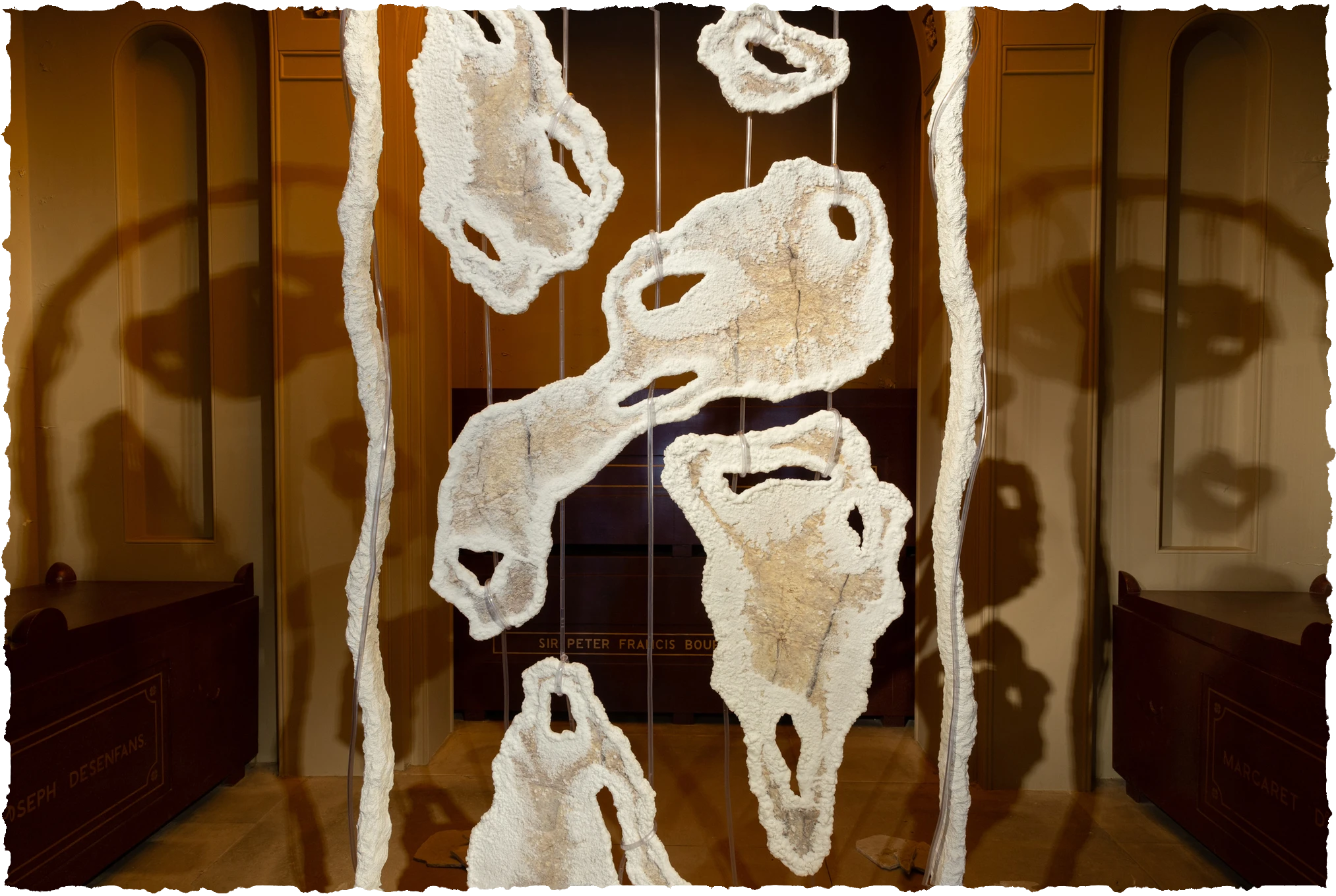
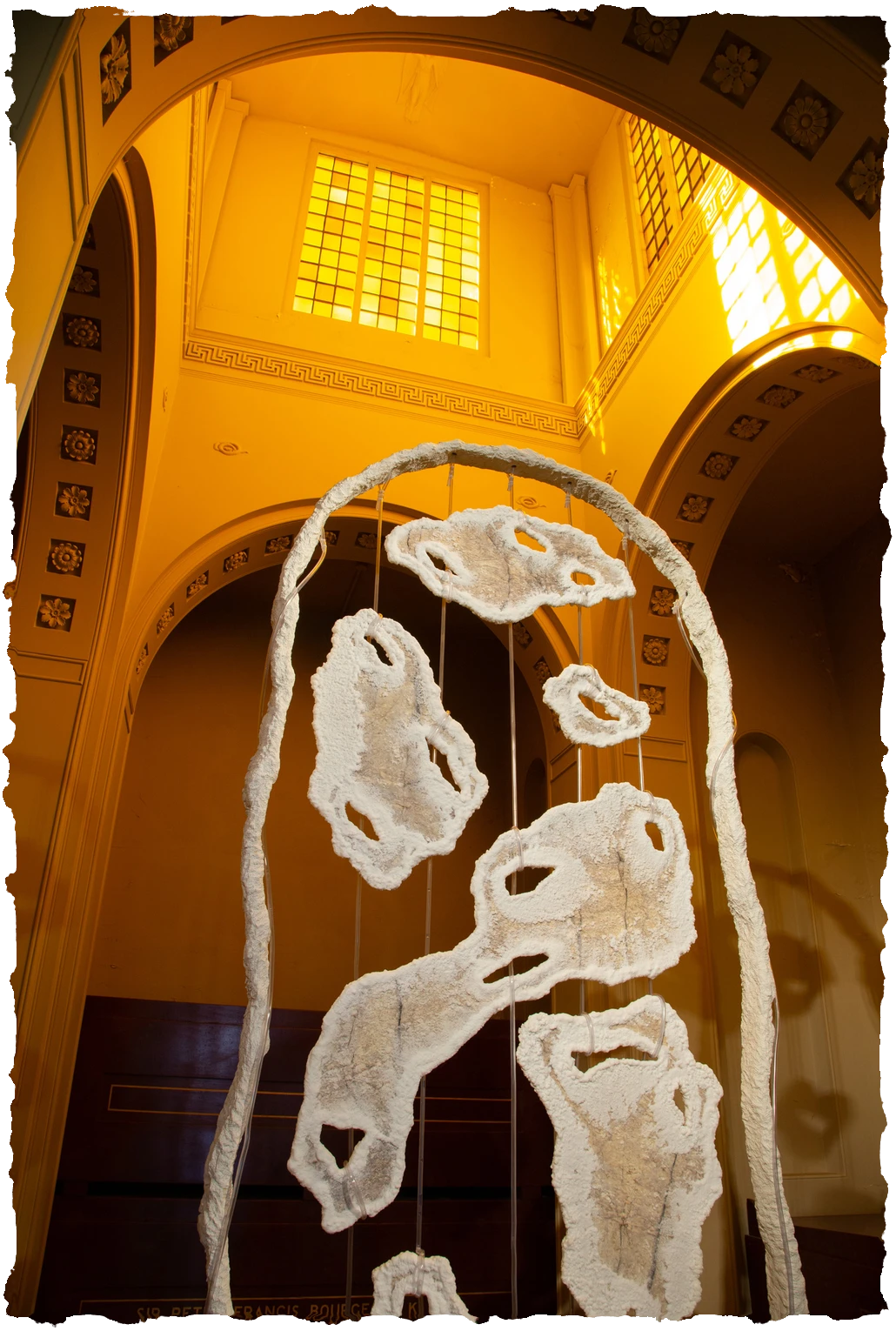
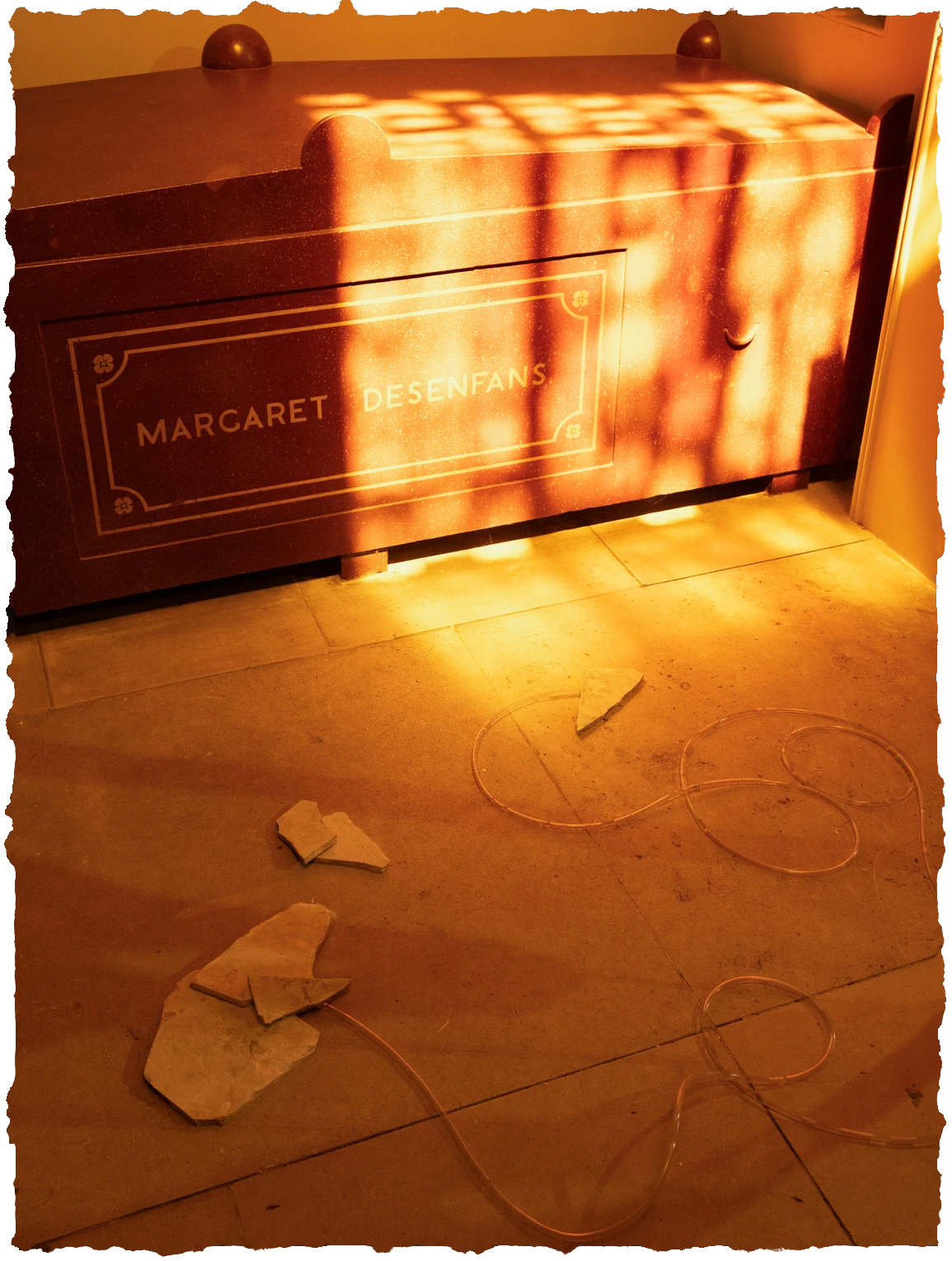
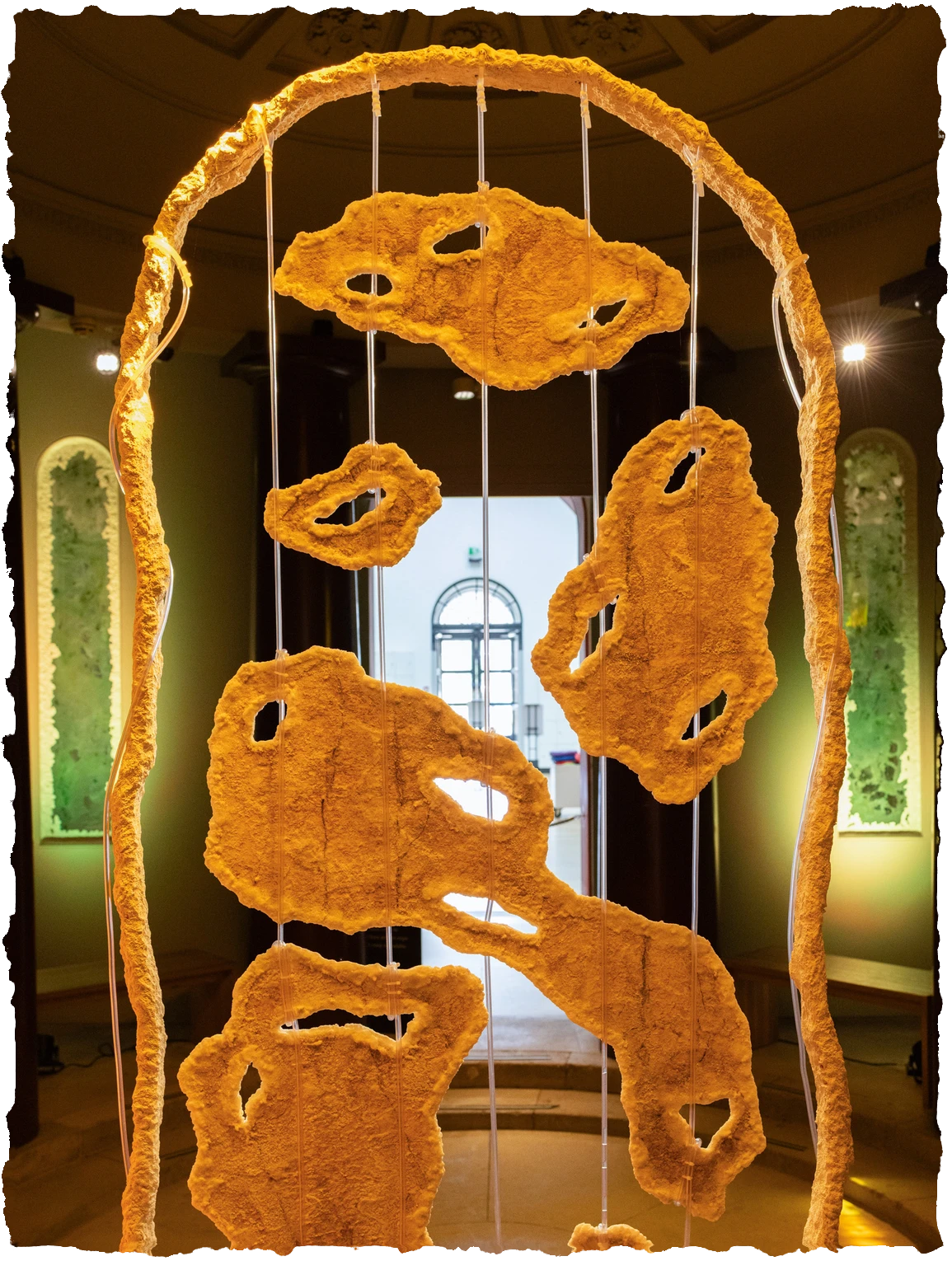
Õllek photographed Panga Cliff, the highest cliff on the island, and fragmented the image into six pieces. Using her technique of growing sea salt crystals on their surfaces, she transforms them into image-sculptures that speak to the limestone's materiality. These elements are connected by transparent hoses filled with Baltic Sea water, arranged to echo the Mausoleum's architecture.
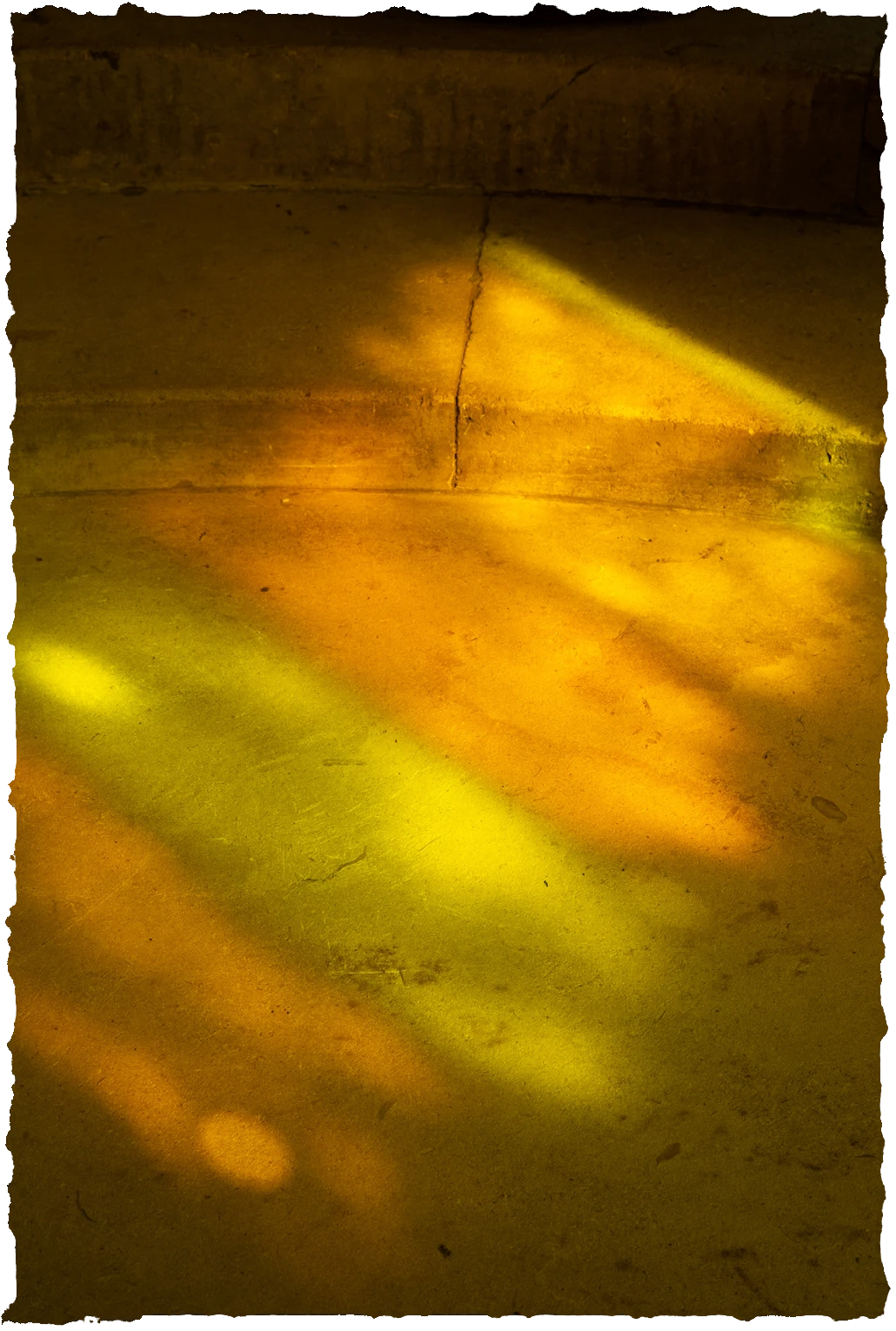
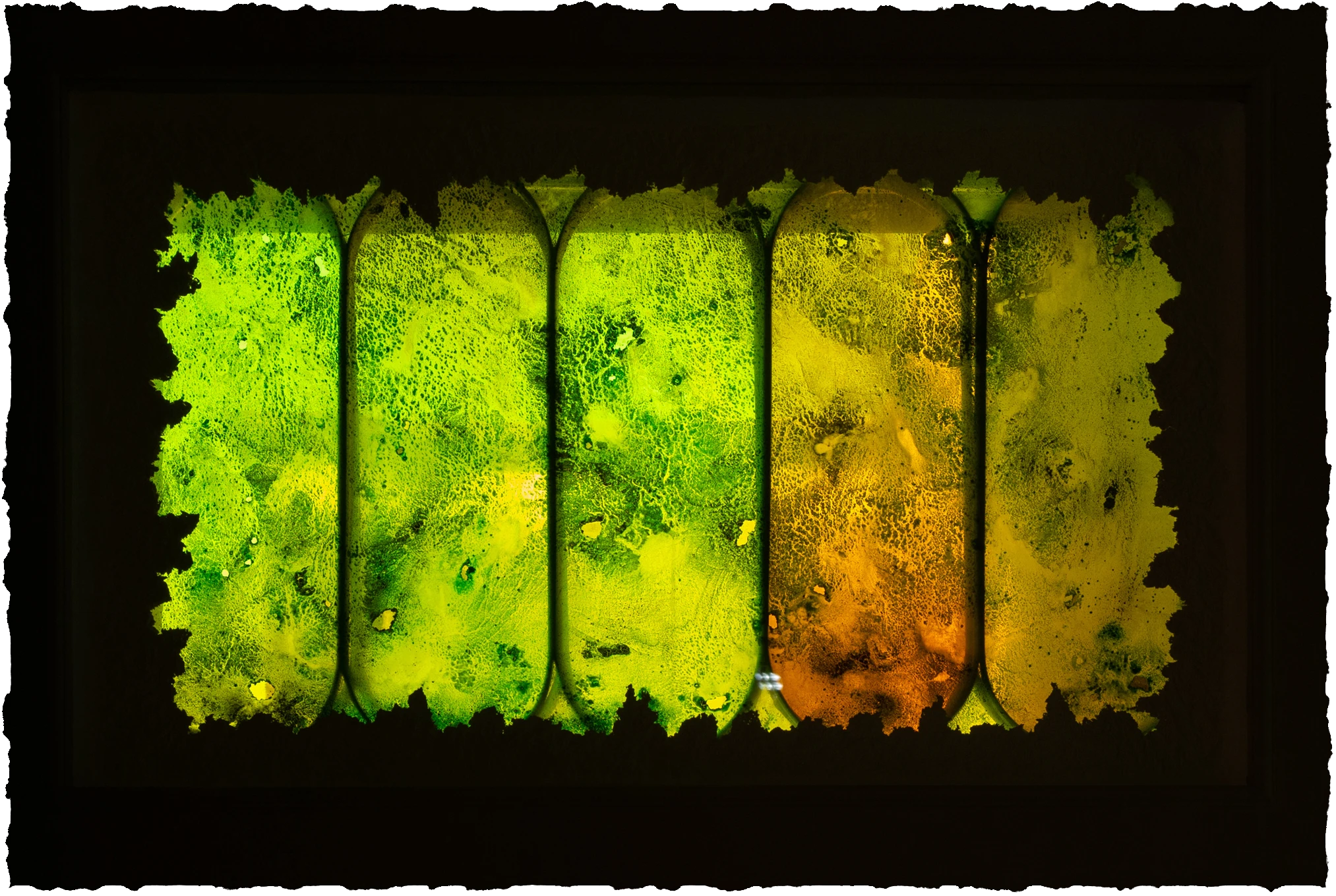
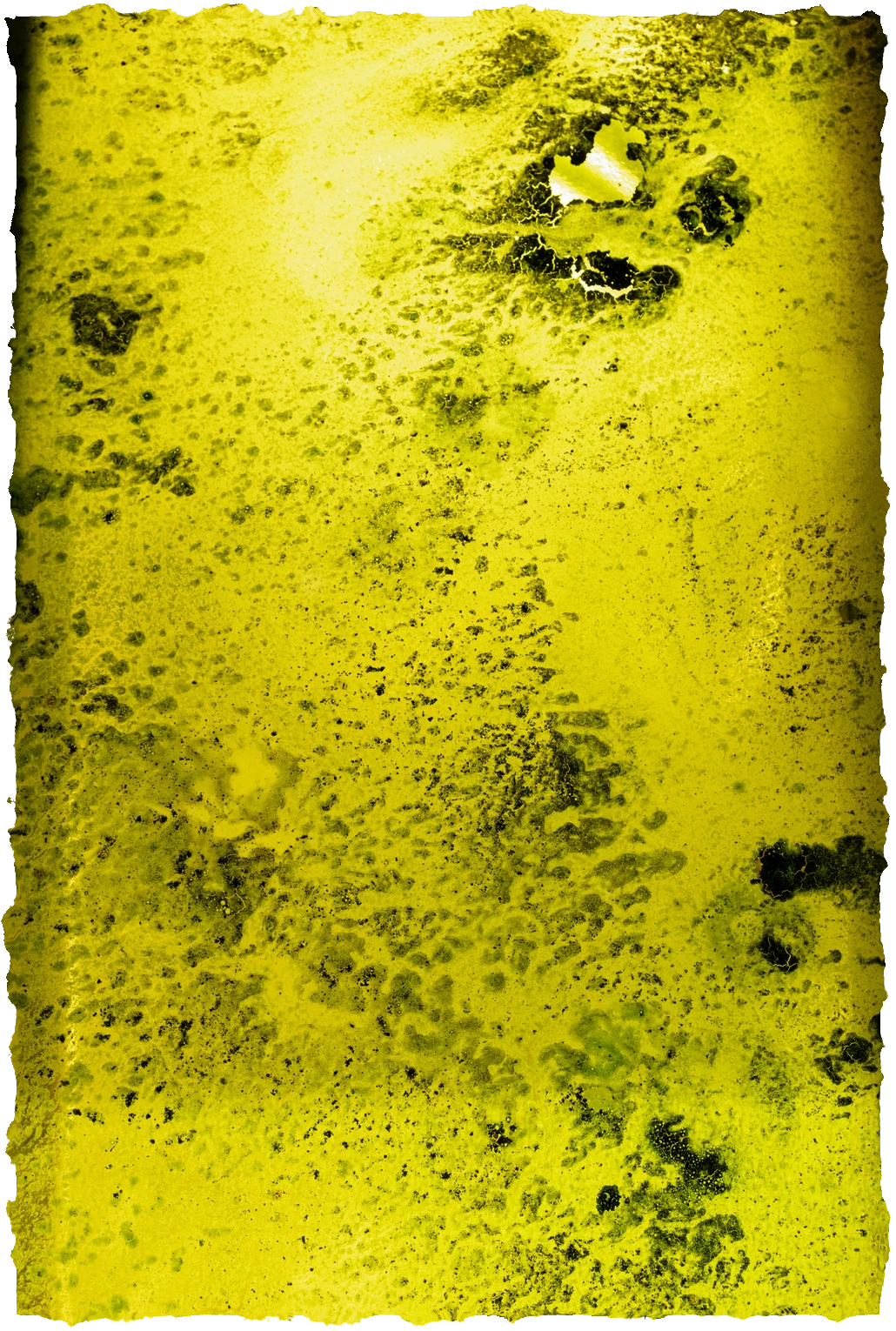
The windows of the mausoleum are covered with cyanobacteria and green pigment mixed with evaporated Baltic Sea water. This references the Baltic Sea's 'dead-zones' oxygen-depleted areas where marine life cannot survive. Cyanobacteria, some of Earth's oldest life forms (3.5 billion years), act as living archives, bearing witness to deep geological histories, while inscribing the present ecological state.
Between Sediments and Dead Zones proposes a monument to these 'dead-zones', representing the aquatic realm within the mausoleum's architectural and symbolic context.