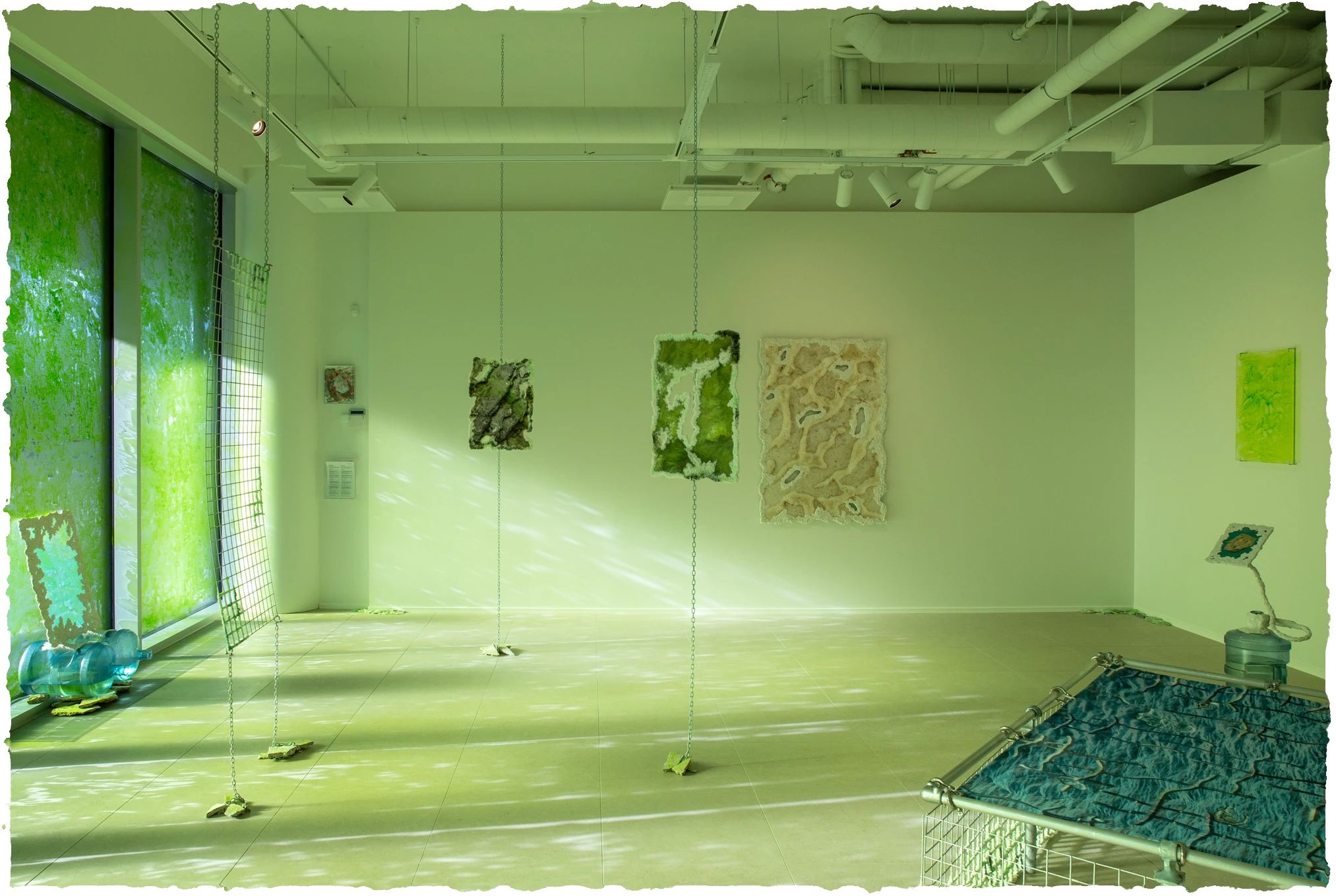
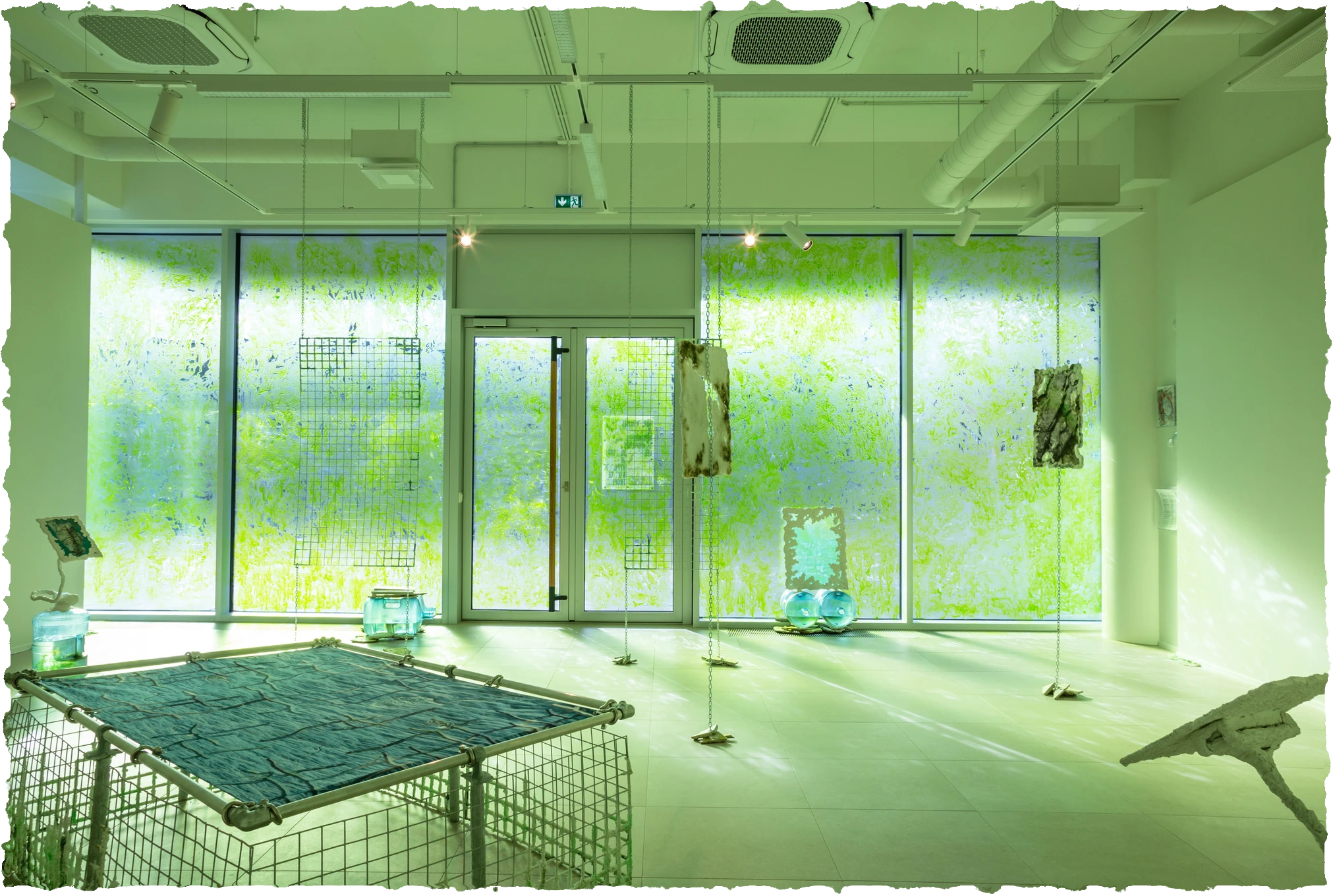
Waters Of Hypoxic Once Tropic
Kristina Õllek's ongoing long-term project Waters of Hypoxic & Once Tropic centres on the study of the Baltic Sea area, with a focus on its marine ecology, cyanobacteria and sediments. The Baltic Sea is one of the world's most polluted seas due to intensive agriculture, hazardous substances, domestic and industrial wastes, marine litter and underwater noise that has affected its ecosystem. It is a semi-enclosed sea with a slow water exchange and its recovery capacity is, therefore, relatively limited. The excess nutrients in the water, inadequate water treatment, and rising sea temperatures create eutrophication and significantly affect the cyanobacteria community, leading to increasing annual cyanobacteria blooms.
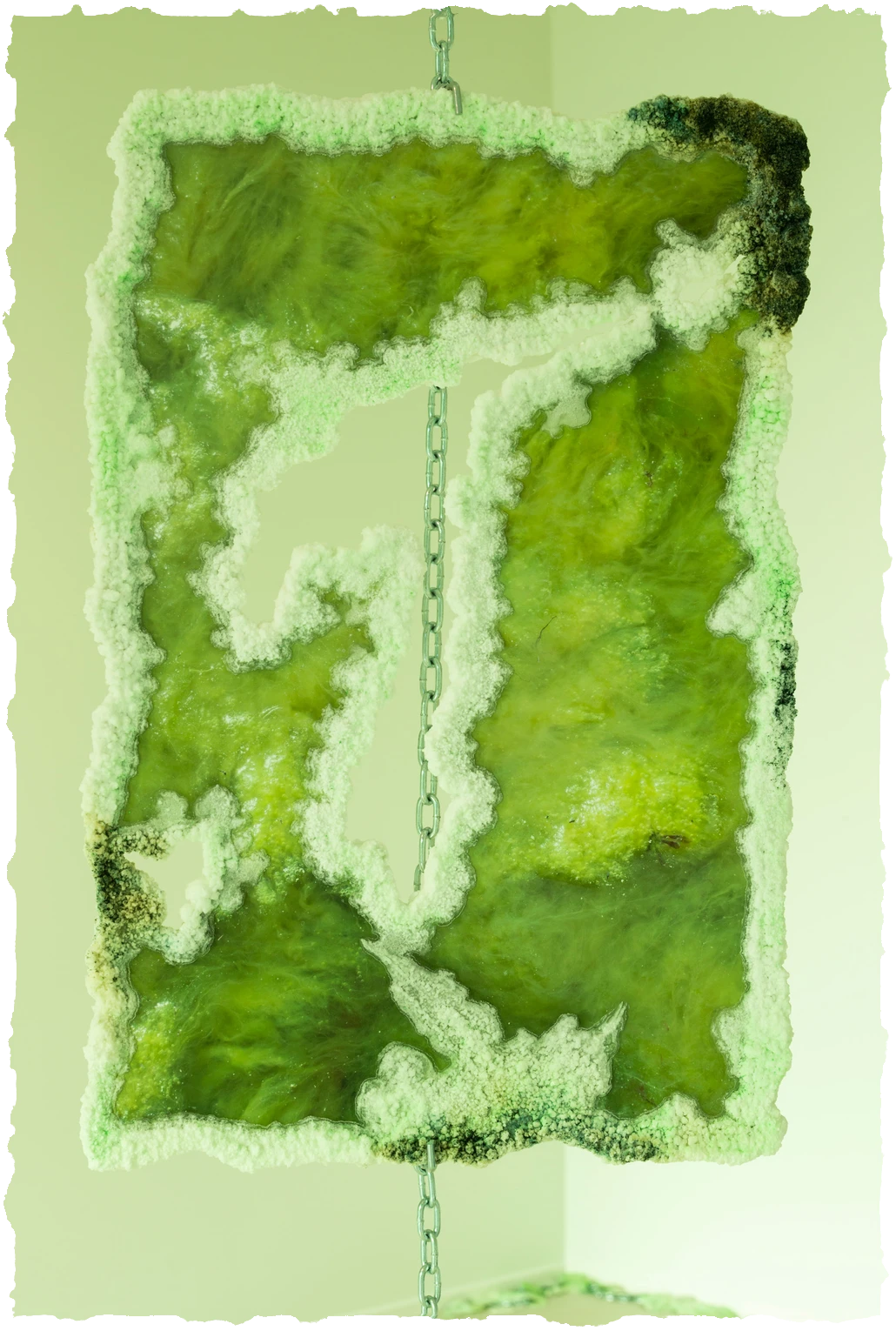
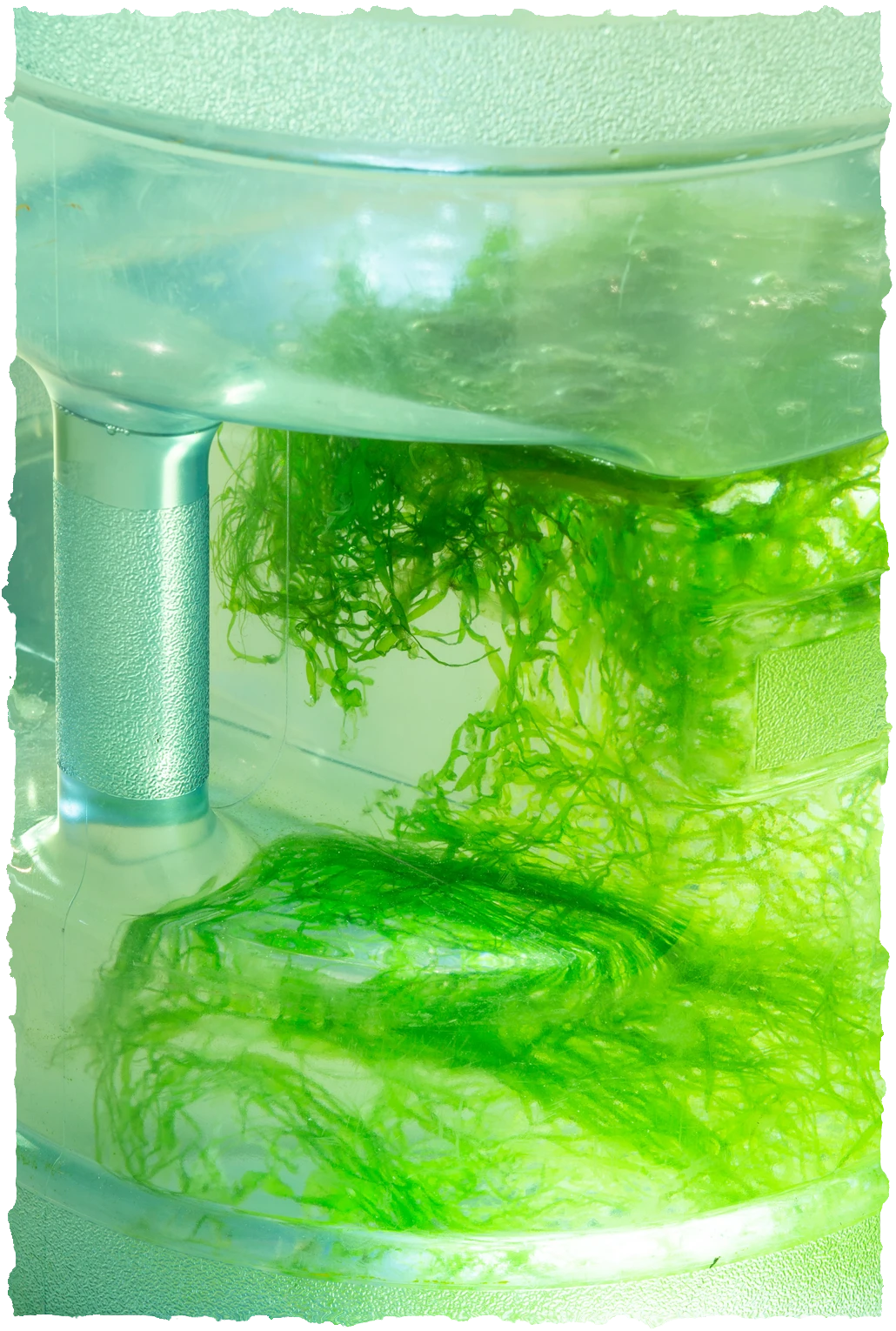
Õllek has been researching and working with cyanobacteria, one of the oldest living things on our planet, and one of the most amazing and most important organisms on Earth: 3.5 billion years ago, cyanobacteria played an important role in oxygen exchange, and the atmosphere was created largely due to them. However, each year the Baltic Sea battles with cyanobacteria blooms, which happen when otherwise harmless cyanobacteria are introduced to the flow of excess nutrients and fertilizers, and, as a result, become toxic.
The toxic blue-green algal blooms create hypoxia, which are highly depleted and oxygen-poor areas. These areas are called 'dead zones' and they have a major impact on marine ecology. In addition to these annual dead zones, there's also approximately 60,000–80,000 km2 of the Baltic's seabed in a variable dead zone due to water that is more saline and denser that remains on the bottom, therefore isolating it from surface waters and the atmosphere.
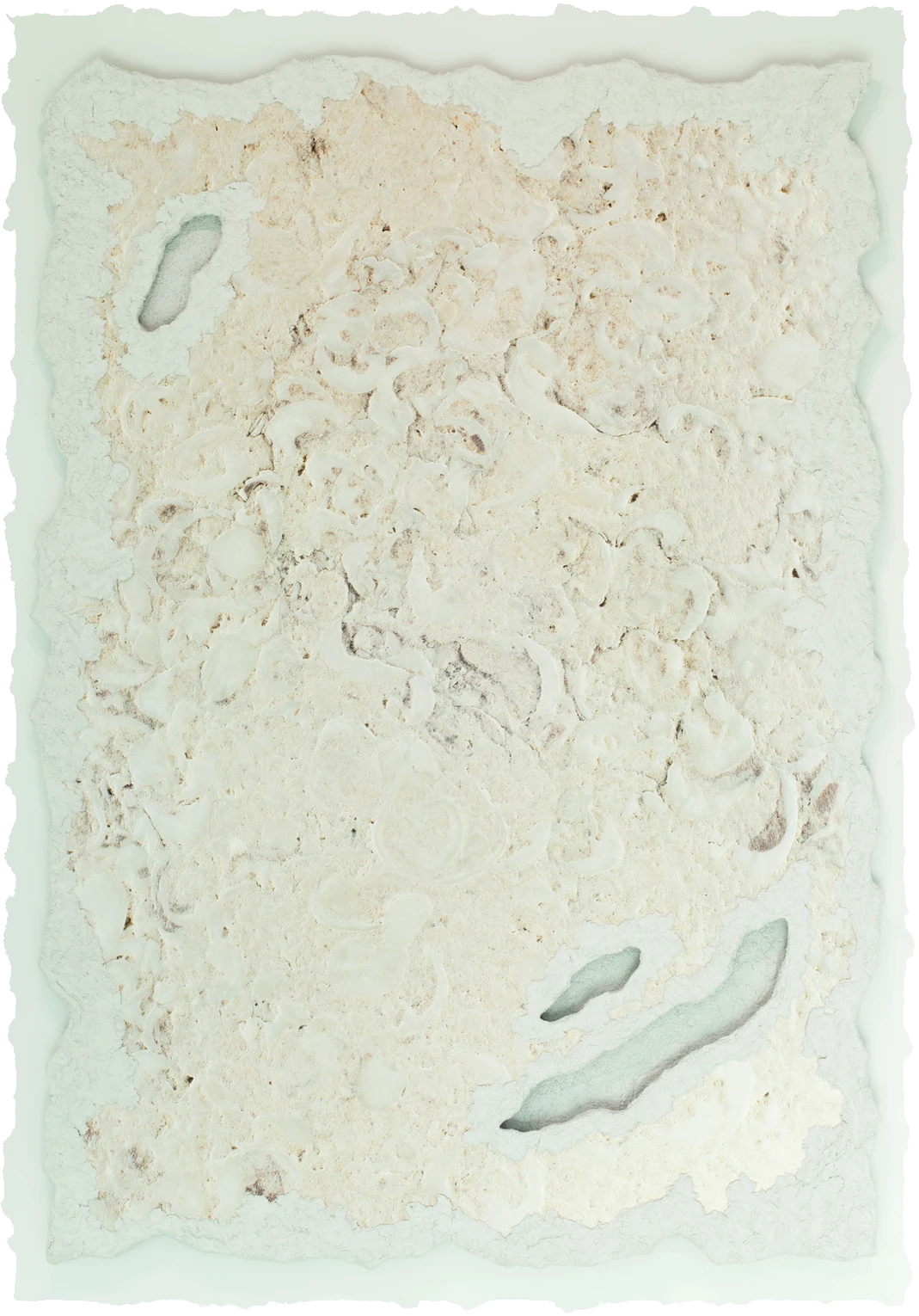
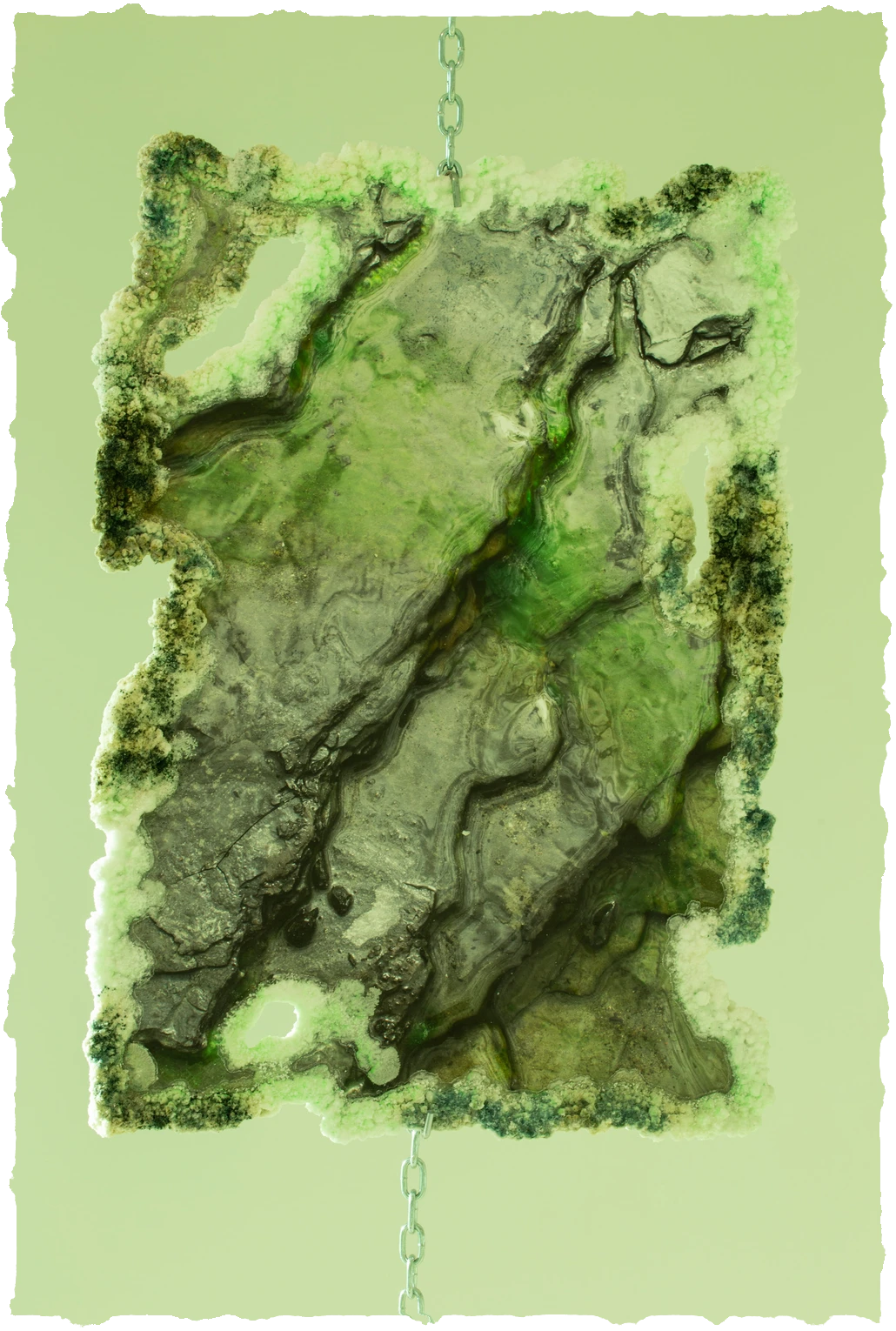
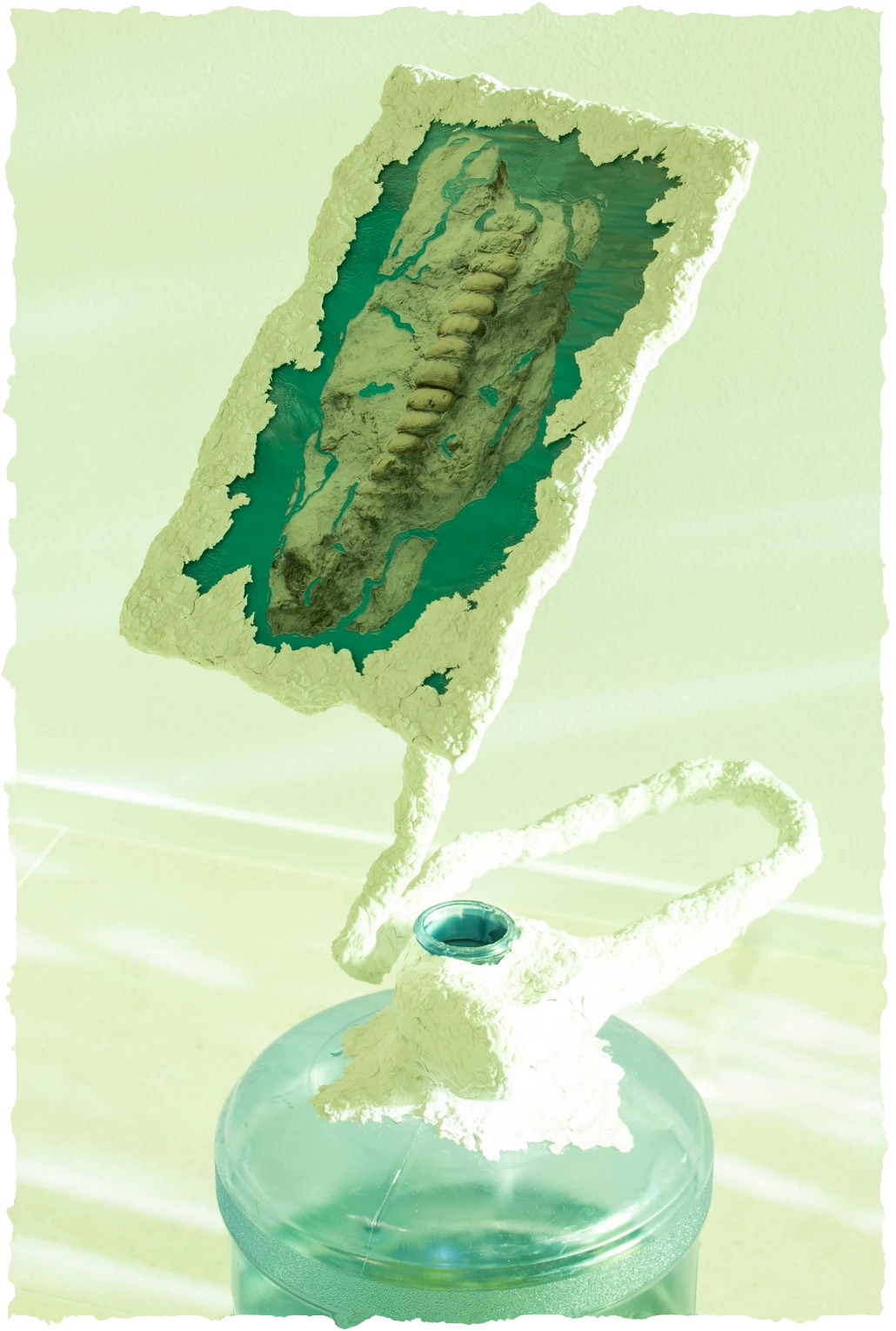
Kristina Õllek explores the geological, biological and chemical changes of the Baltic Sea; reflecting on the Baltic Sea through the presence of cyanobacteria, a speculative perspective and a sedimented past—through several-hundred-million-year-old marine sedimentary rocks, limestone. She is thinking with the sea: its past, present and future, marine life, bacteria and minerals,
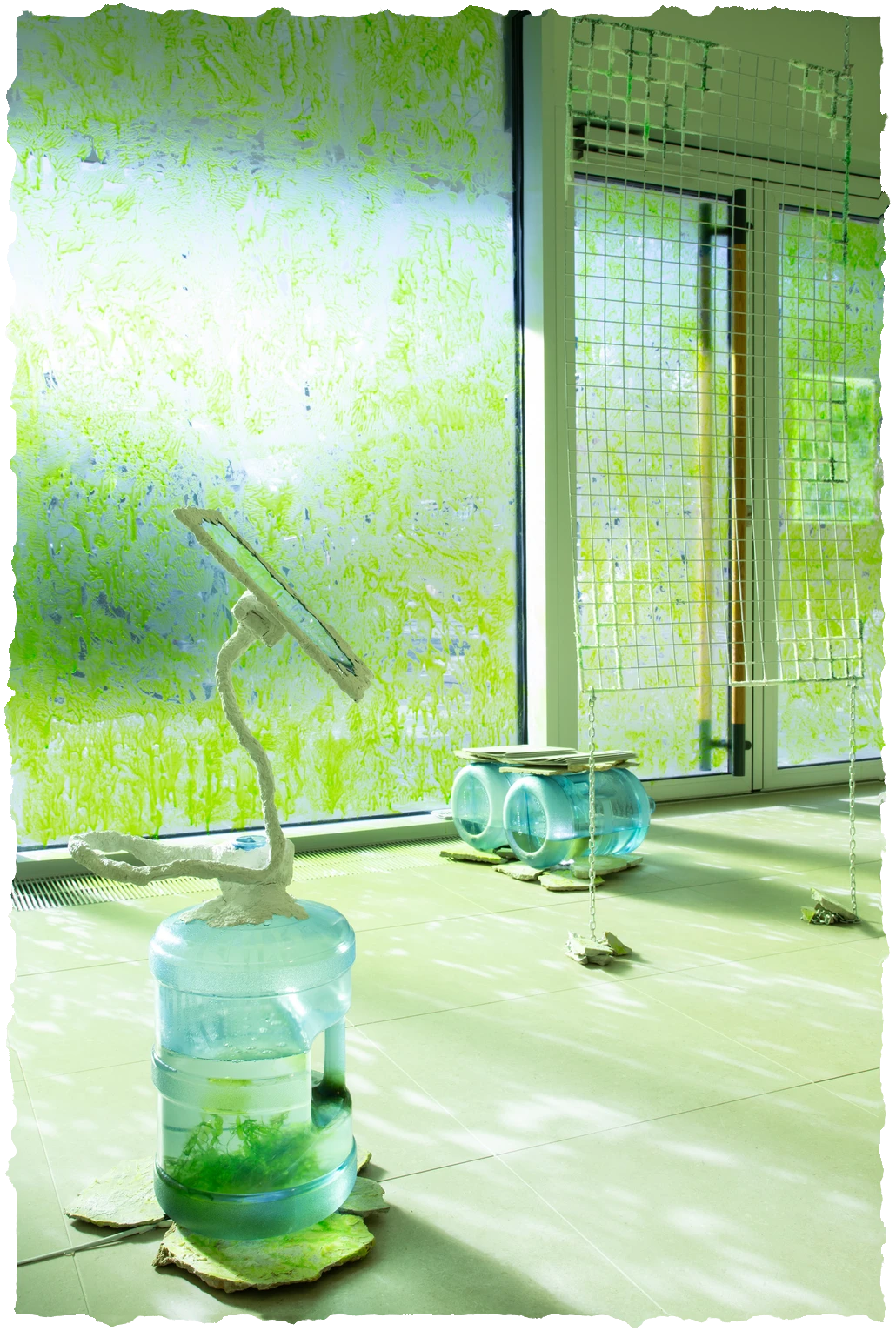
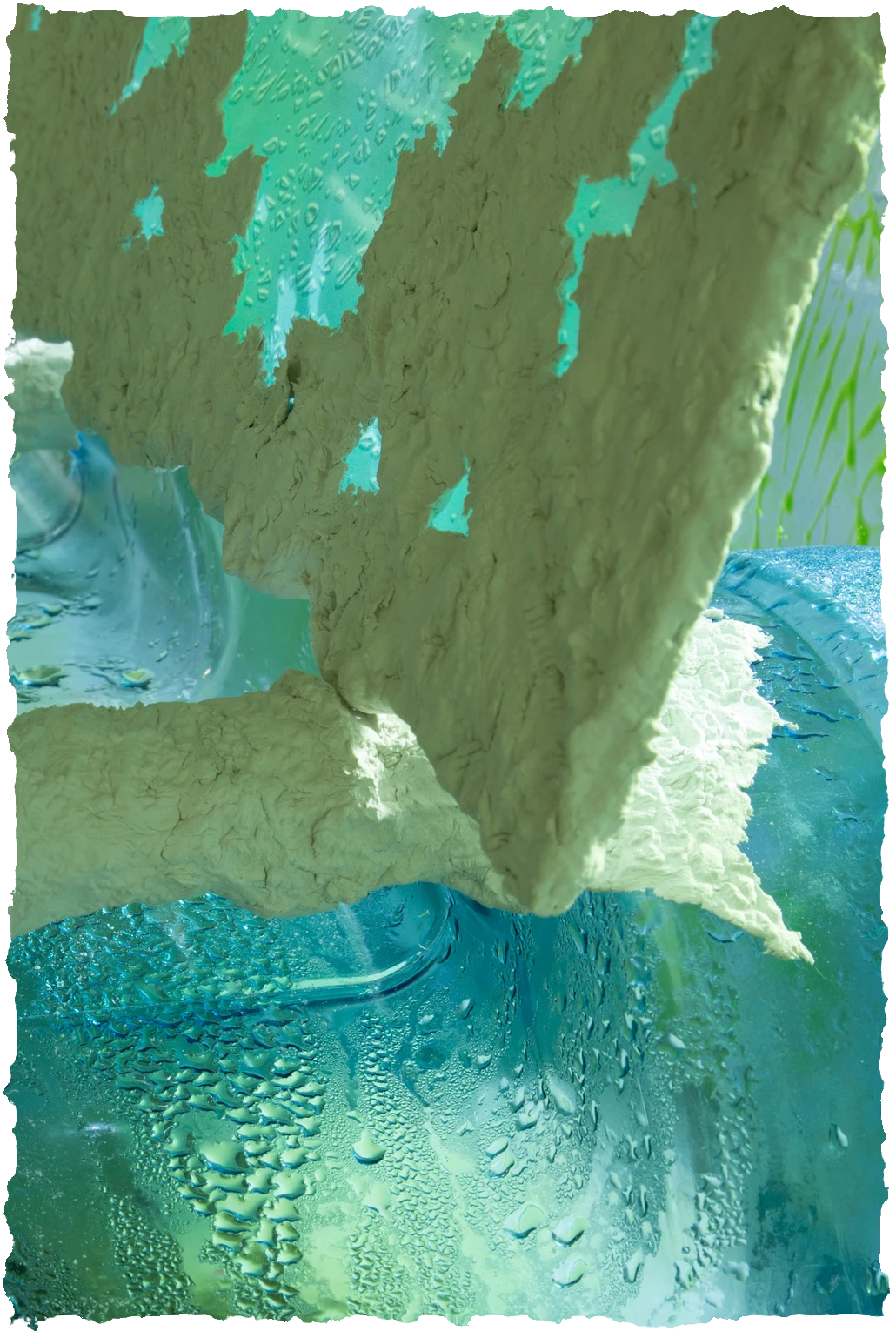
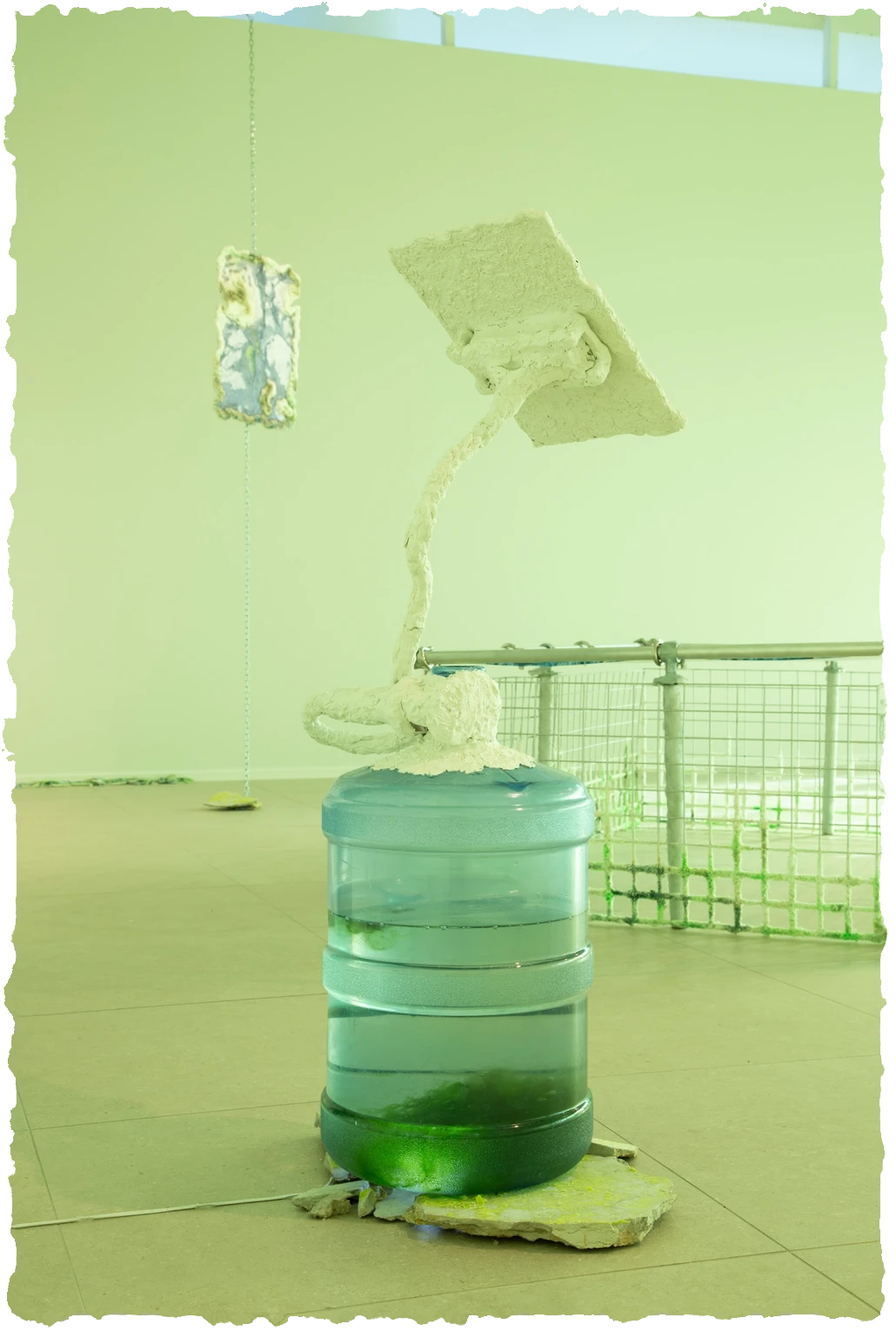
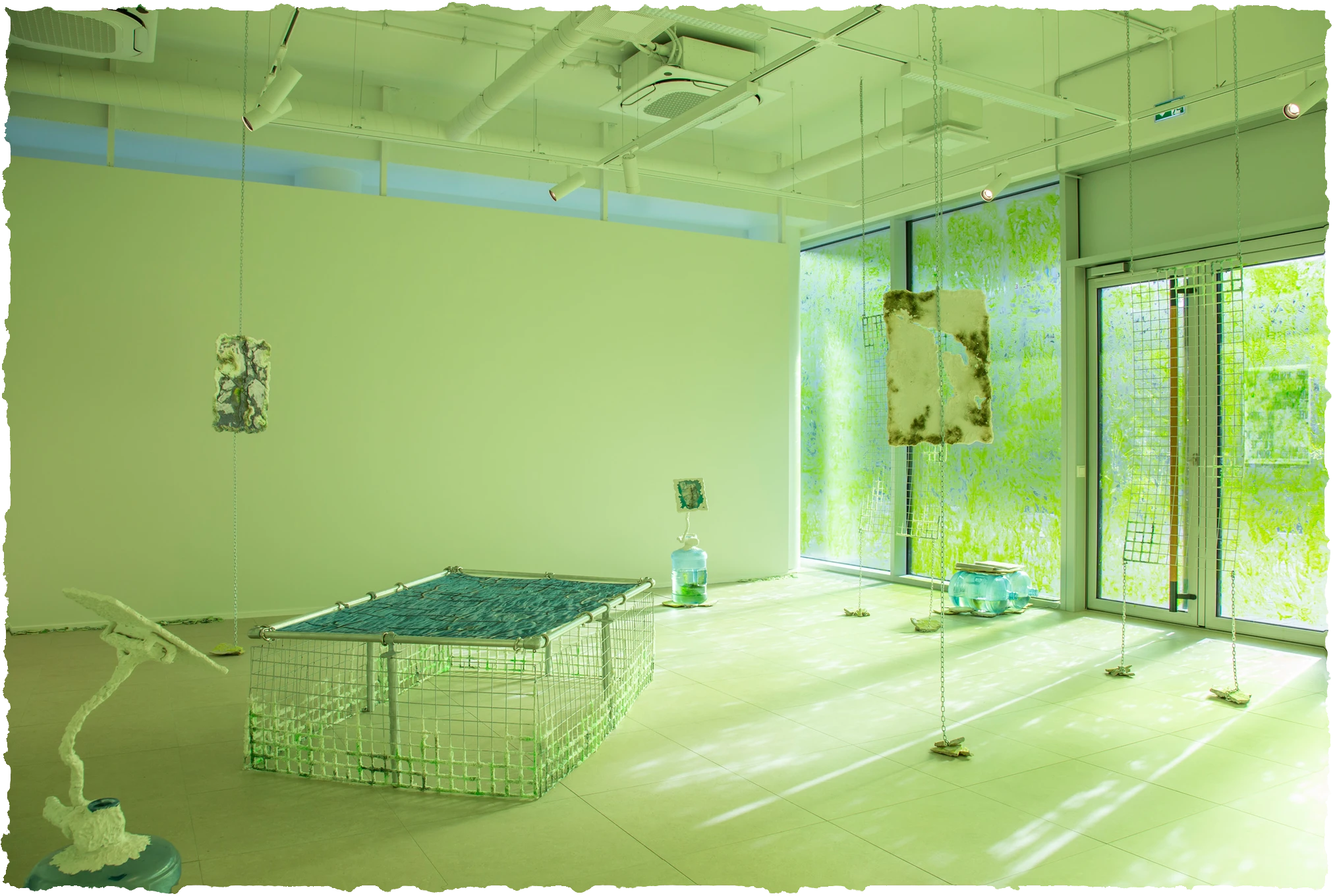
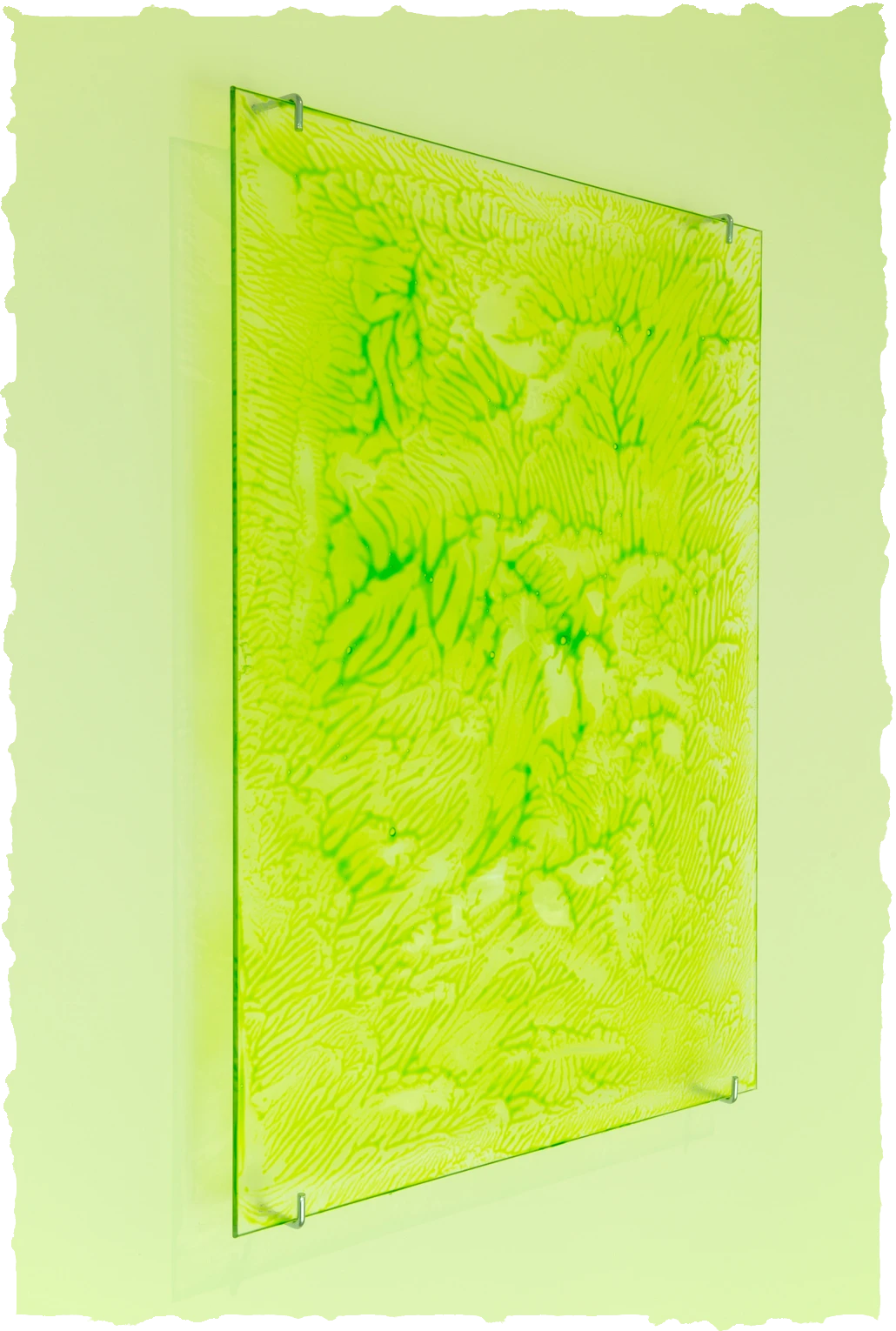
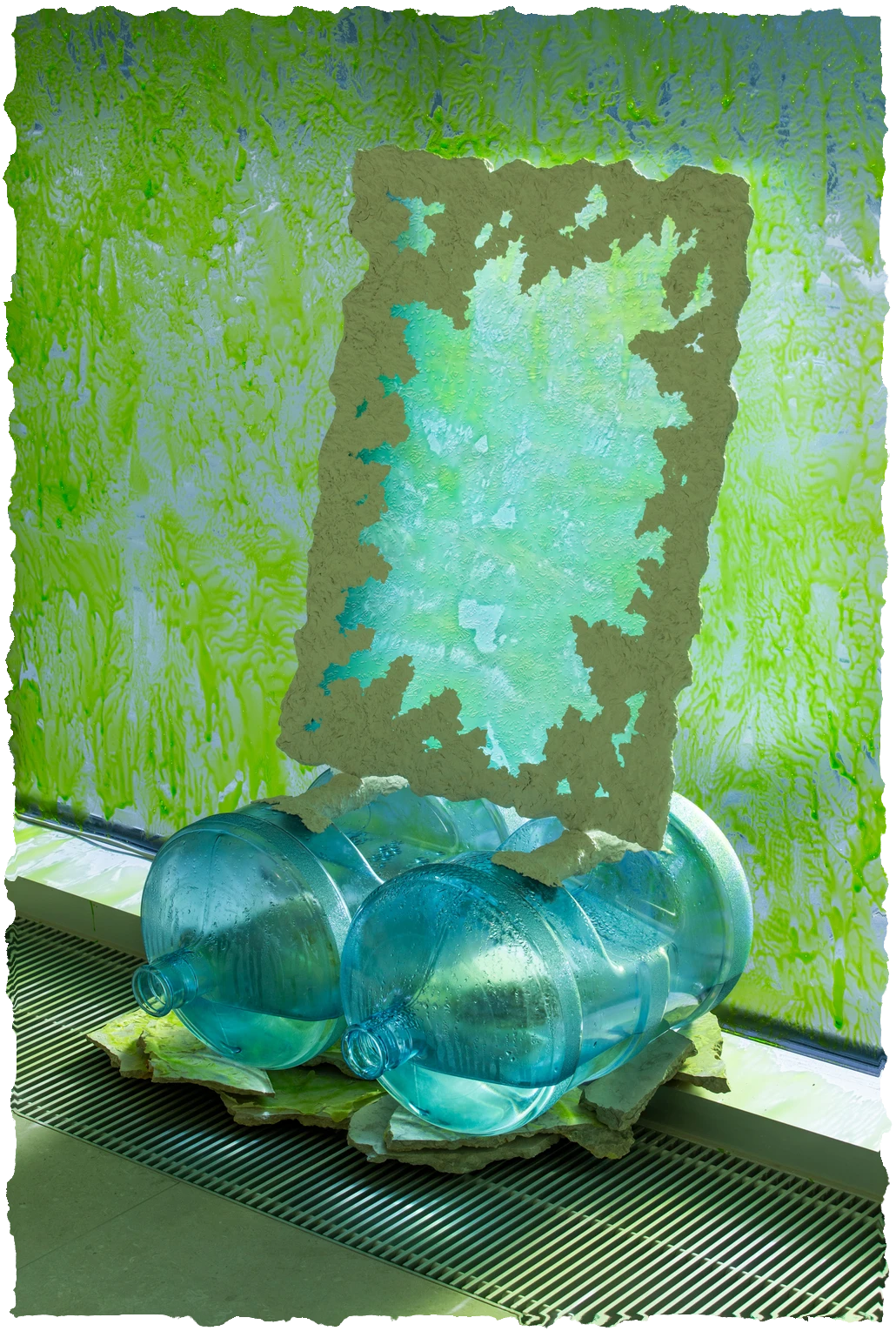
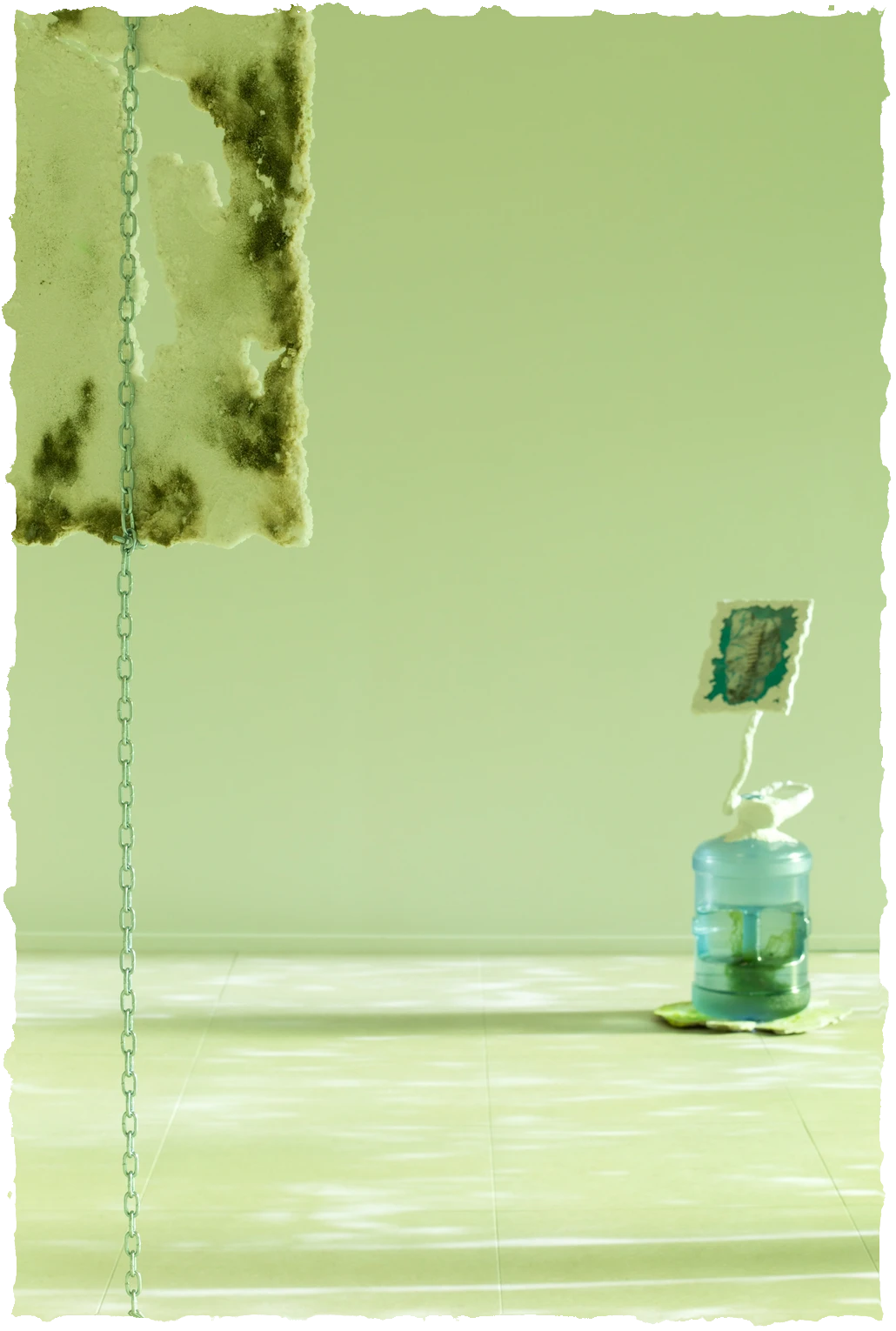
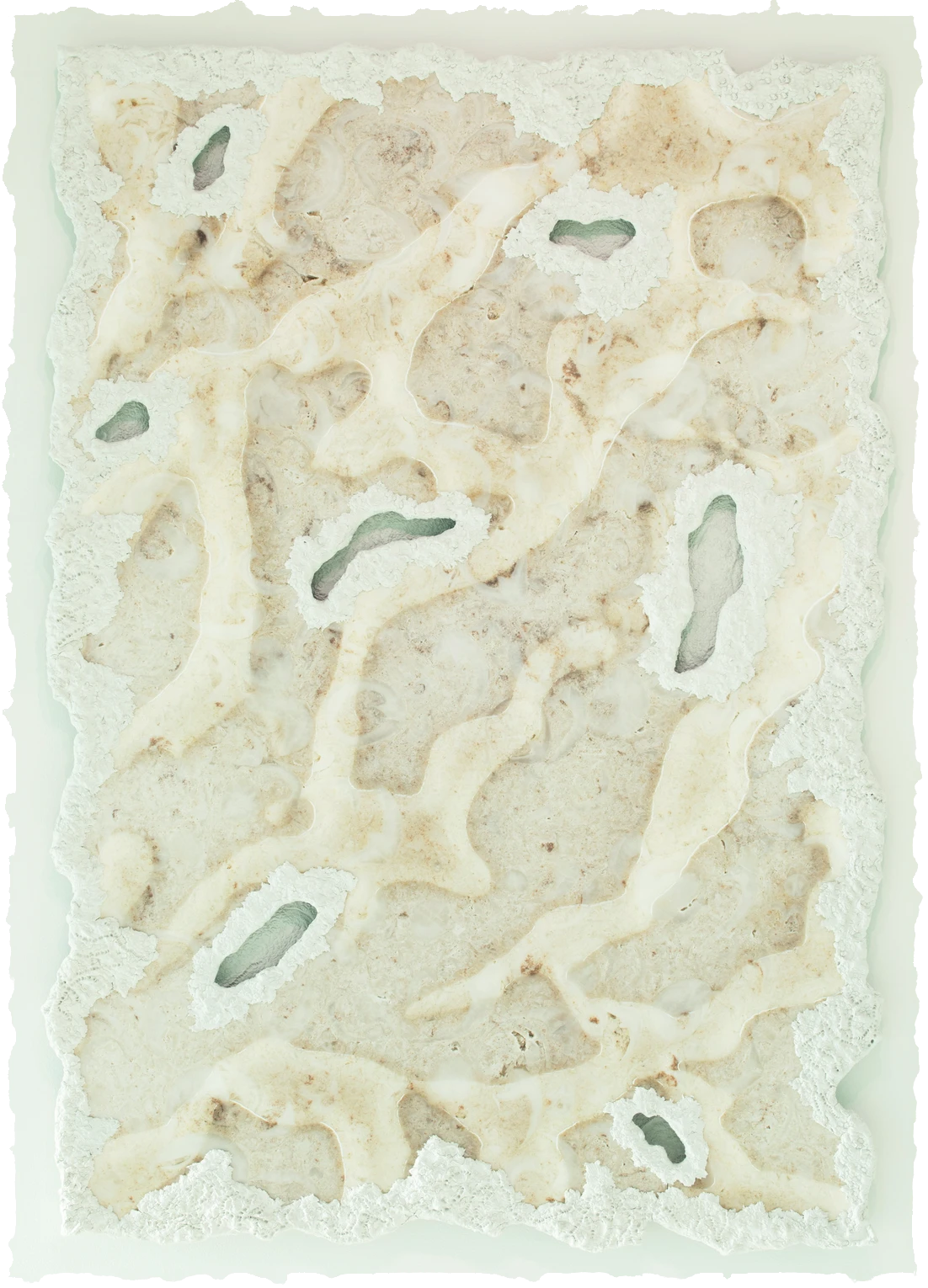
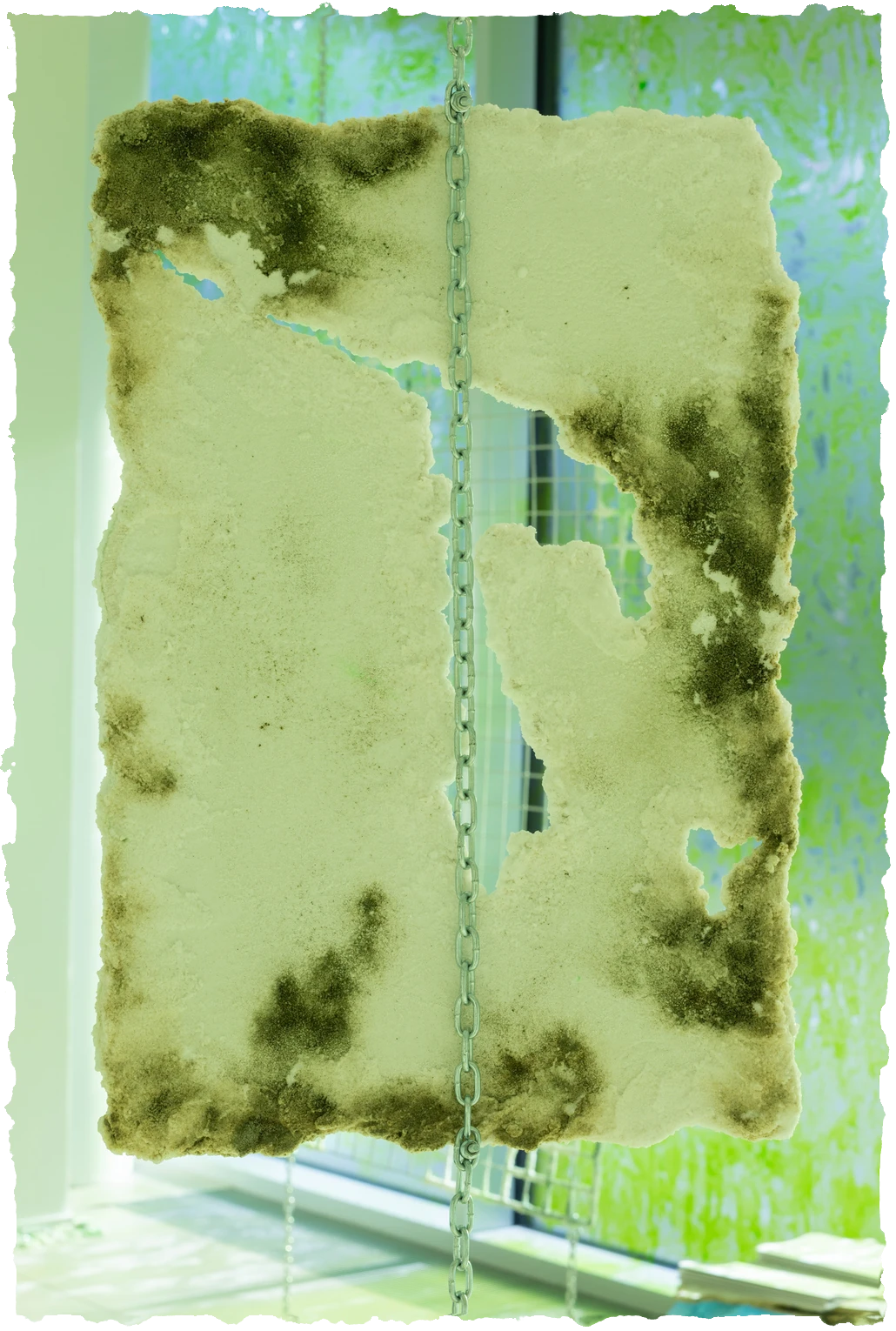
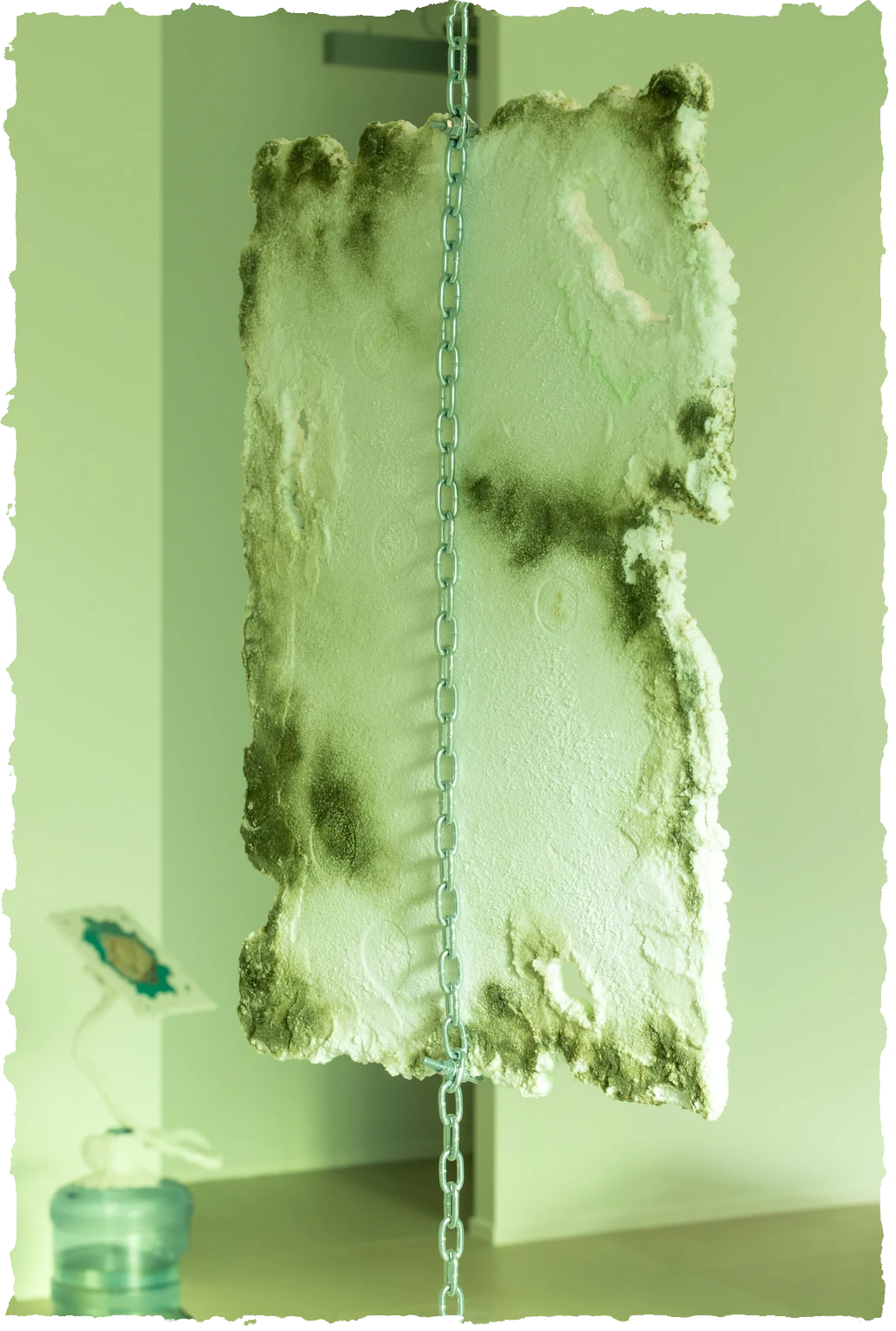
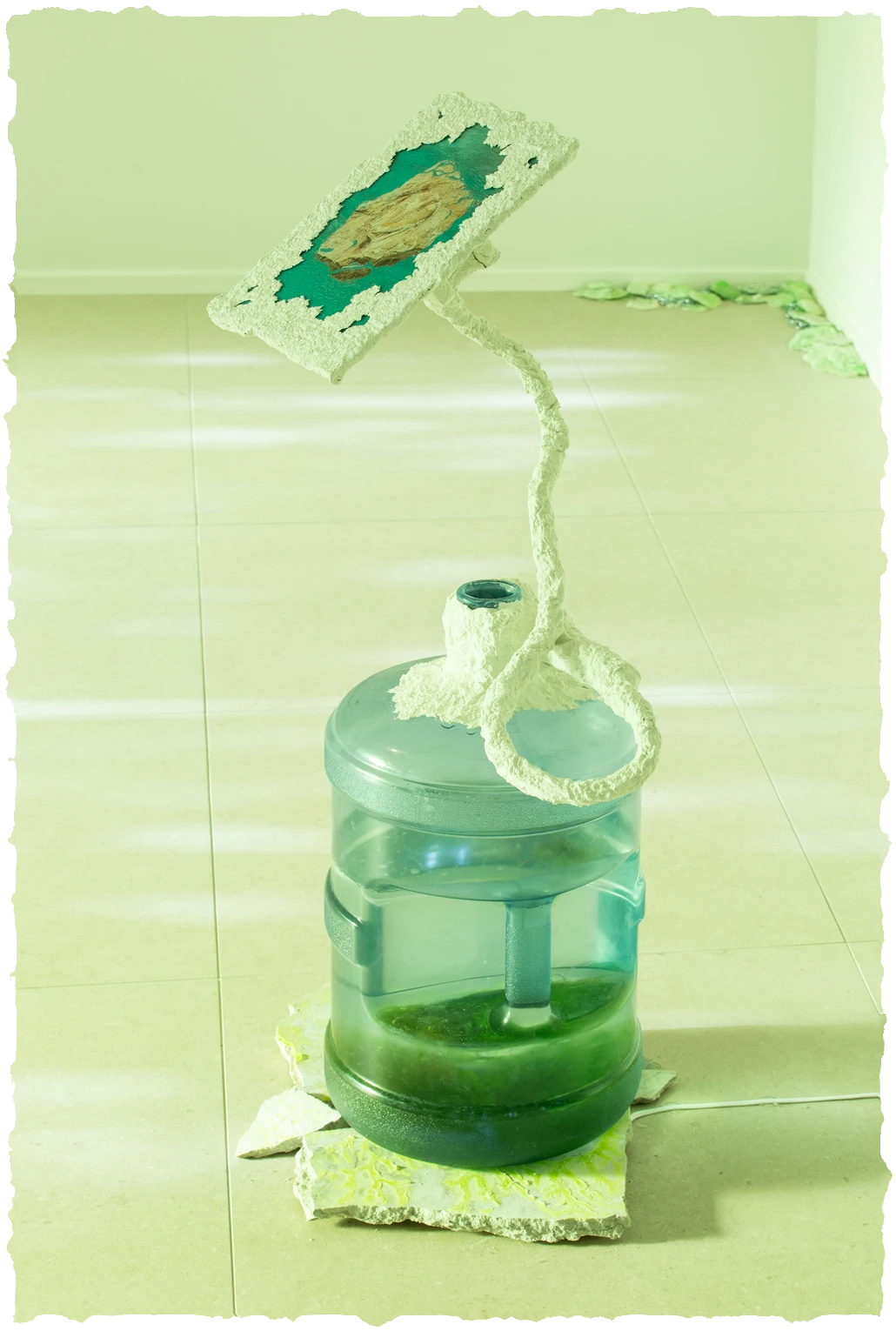
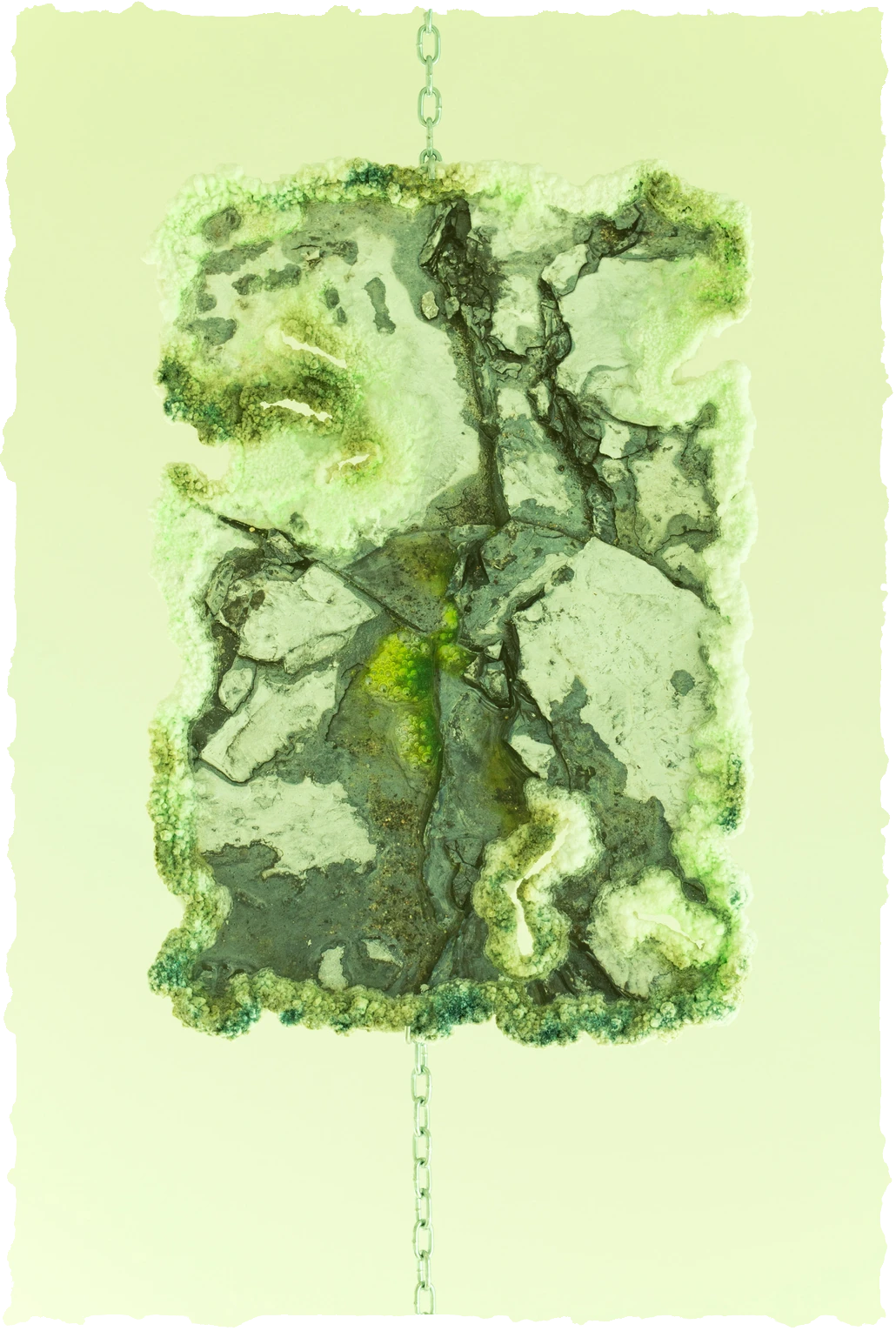
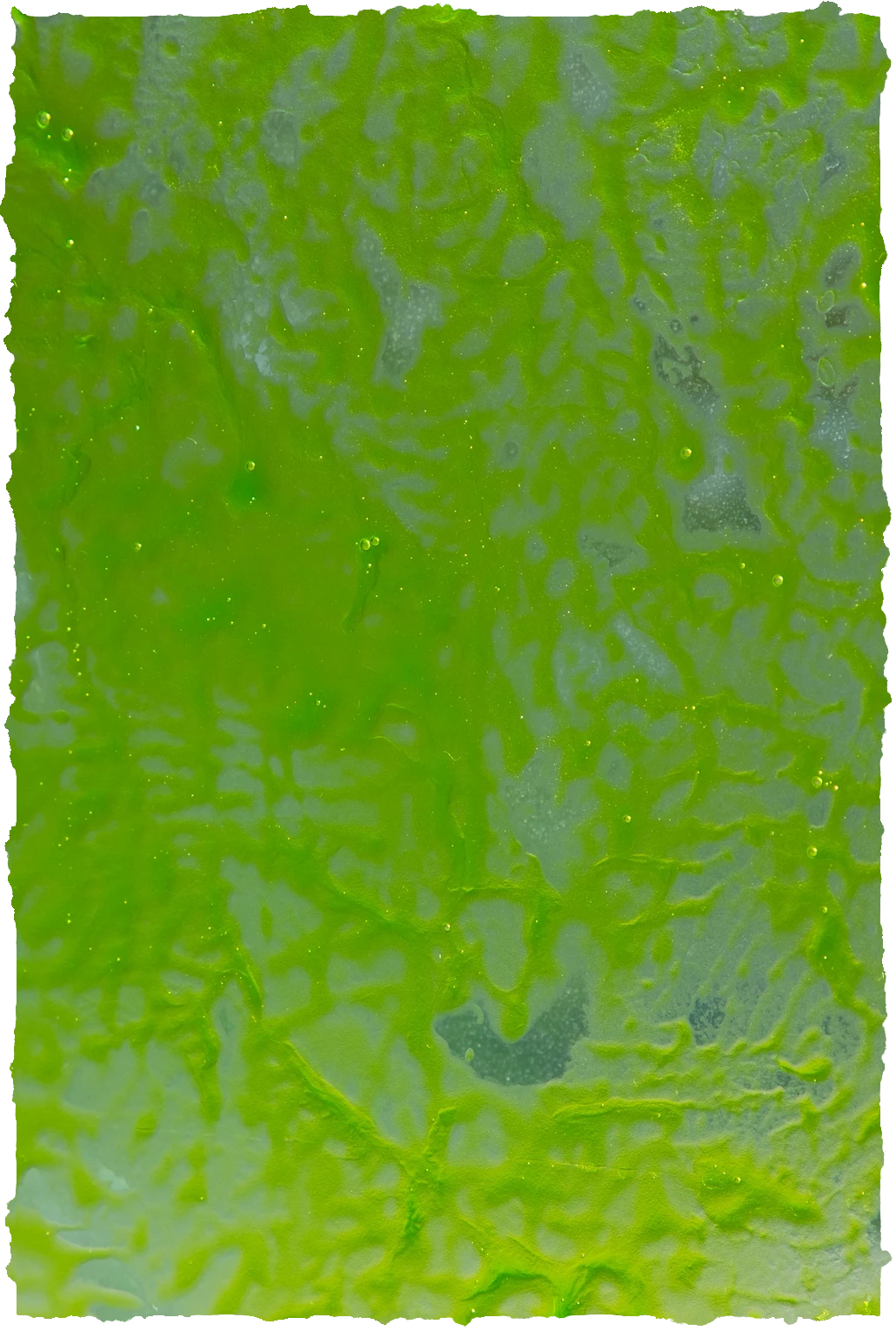
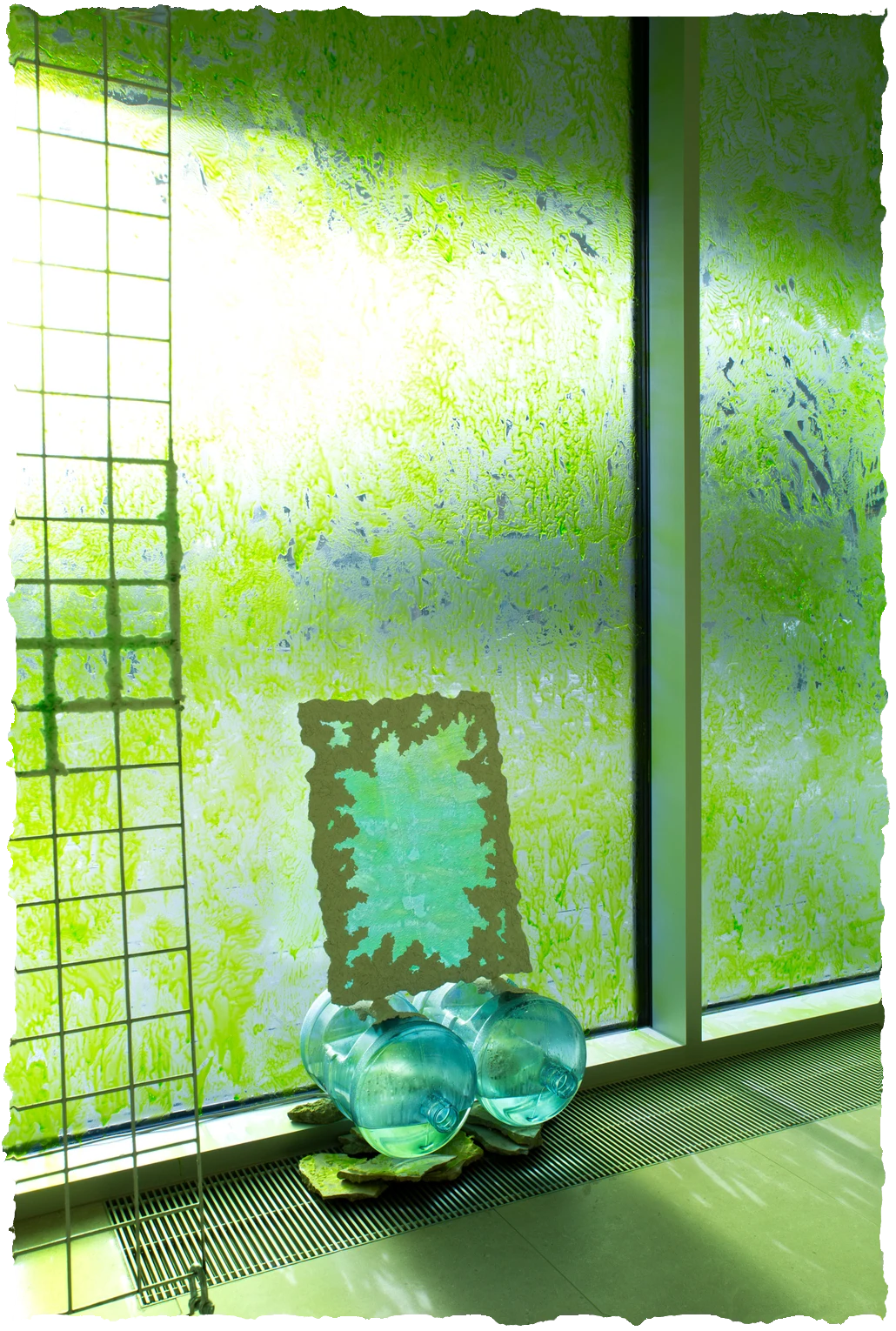
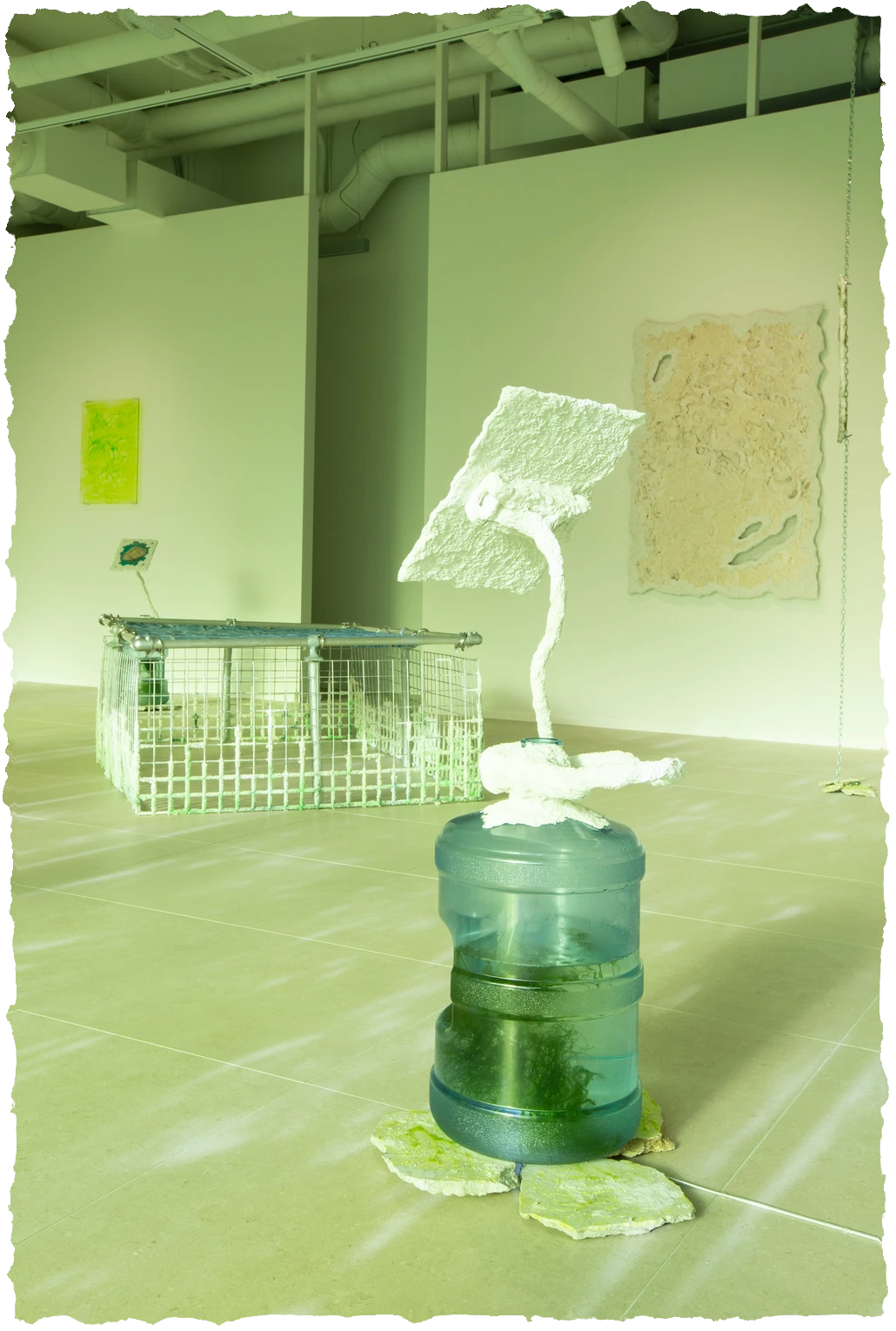
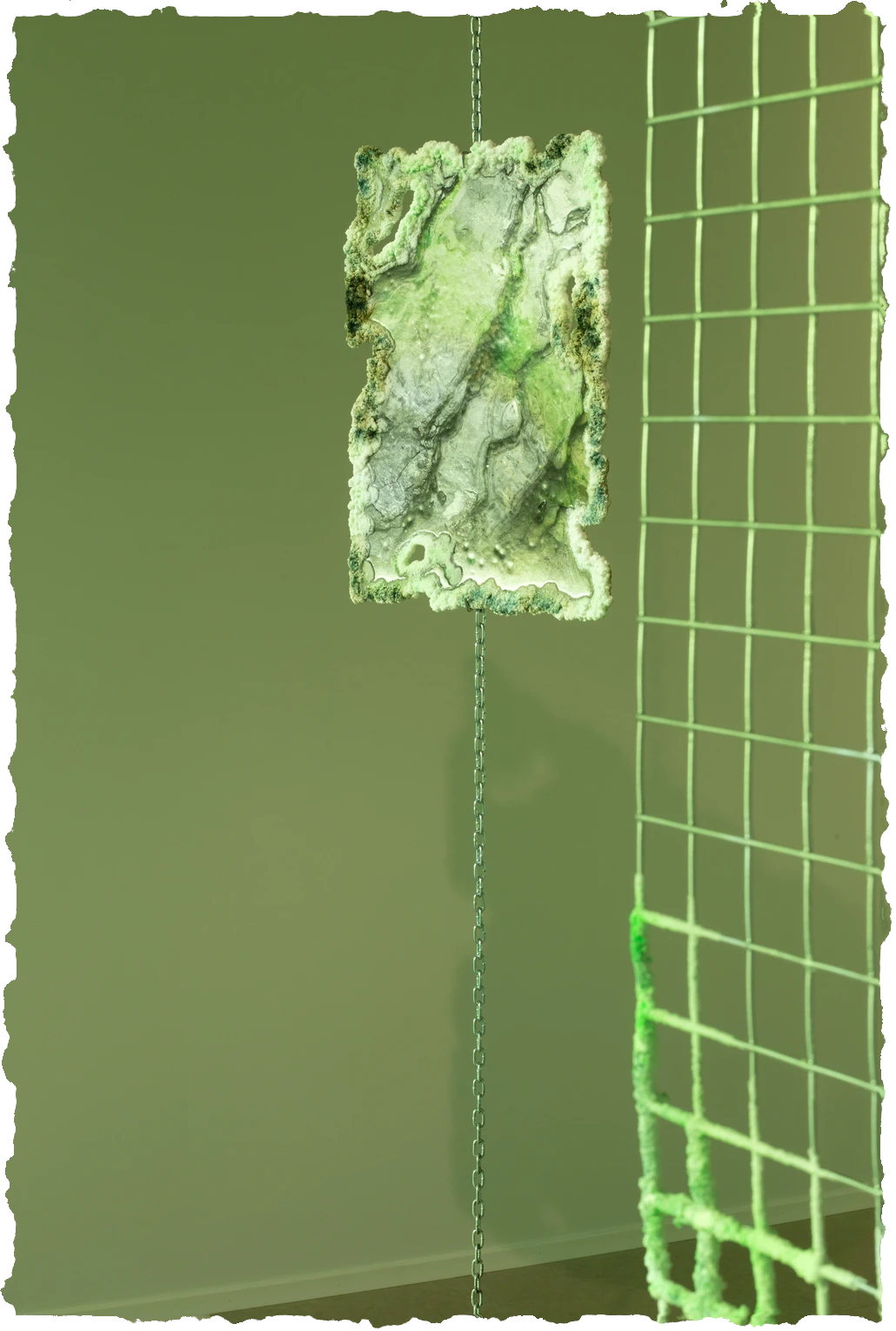
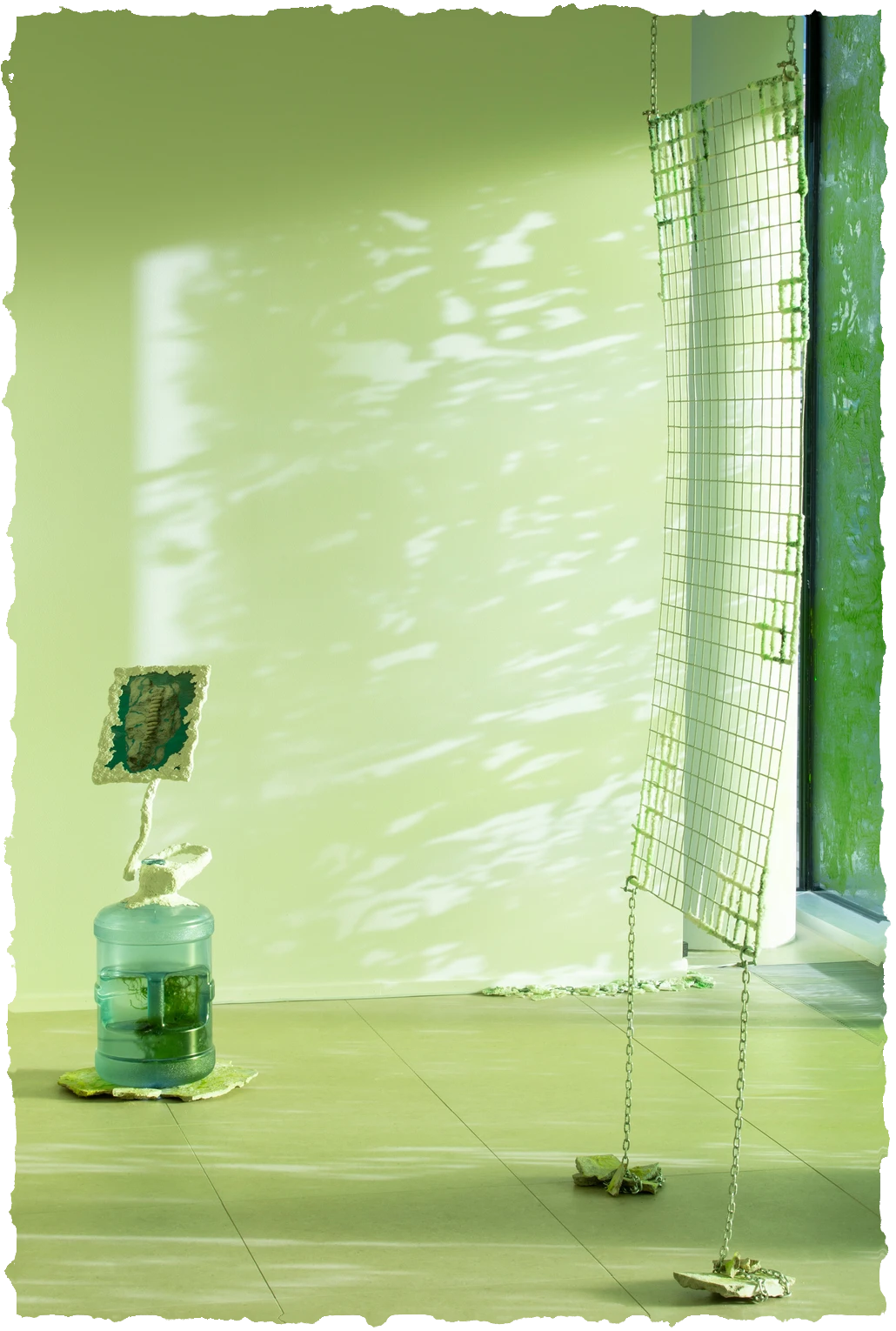
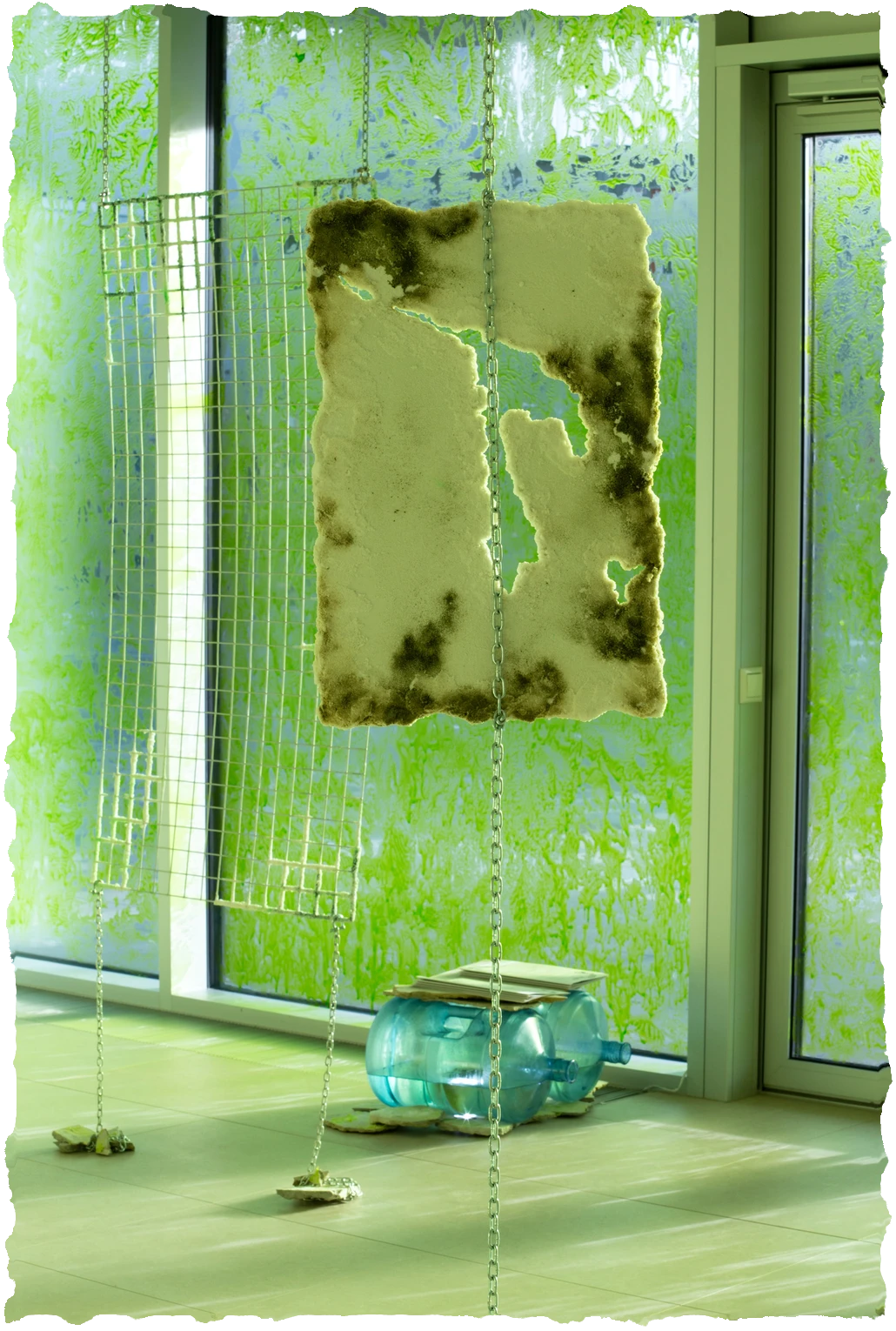
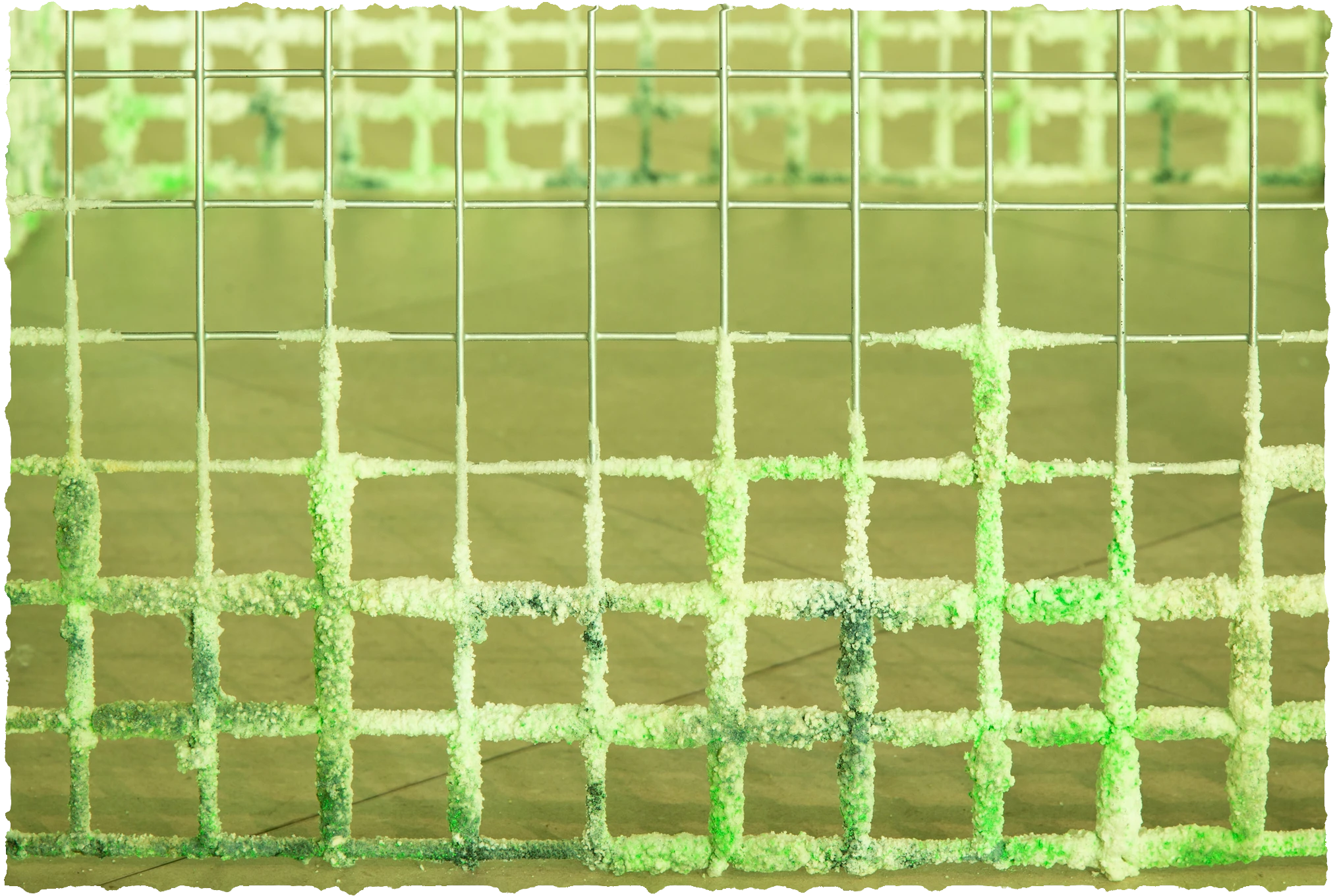
Within long and experimental process of growing sea salt onto her photographical works and installations; as well using the pigments of cyanobacteria and green fluorescent; seawater, limestone, metal, clay, pigments, fossils—Kristina Õllek's body of work brings out the anthropocentric impact on fragile marine ecology and its complex interconnections.